E7018 vs E71T-11: Stick Rod vs Flux-Core Wire Comparison
E7018 is the standard code-quality stick rod. E71T-11 is self-shielded flux-core wire for faster outdoor welding. Different processes, different strengths.
E7018: Code-quality structural welding. E71T-11: Non-code fabrication where speed matters.
Which One Should You Use?
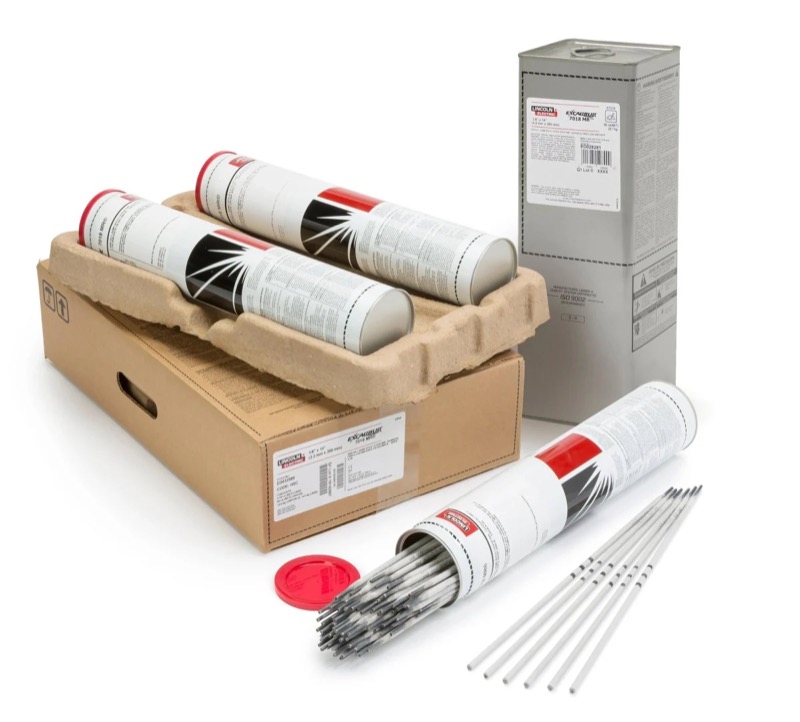
Pick E7018 if:
Code-quality structural welding. D1.1 and pressure vessel work. Pipe welding. When WPS specifies stick. When you need low-hydrogen properties. Tight spaces where a MIG gun does not fit.
Runs on DCEP, AC, 70-400A range. E7018 full amperage chart
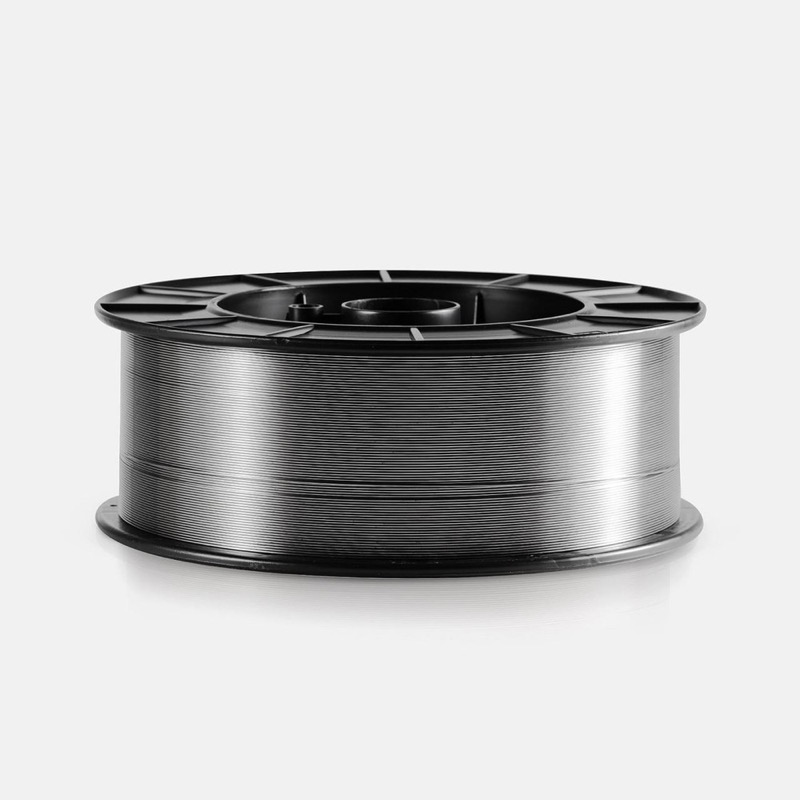
Pick E71T-11 if:
Non-code fabrication where speed matters. Outdoor and field welding. Farm and ranch repair. Long continuous welds where stick rod changes slow you down. When you have a wire feeder available.
Runs on DCEN, 30-225A range. E71T-11 full amperage chart
Key Differences
| Attribute | E7018 | E71T-11 |
|---|---|---|
| Difference 1 | E7018 is stick welding (SMAW) with low-hydrogen properties meeting D1.1 code | |
| Difference 2 | E71T-11 is flux-core (FCAW-S) with faster deposition but not low-hydrogen | |
| Difference 3 | E7018 requires more operator skill | E71T-11 is semi-automatic |
| Difference 4 | E7018 needs rod storage discipline | E71T-11 does not |
Settings at a Glance
Machine settings and operating characteristics side by side. For full amperage charts, see the individual electrode pages.
| Setting | E7018 | E71T-11 |
|---|---|---|
| Polarity | DCEP, AC | DCEN |
| Positions | flat, horizontal, vertical-up, overhead | flat, horizontal, vertical-up, overhead |
| Penetration | medium | medium |
| Coating | low-hydrogen iron powder | self-shielded flux-cored |
| Amps at 3/32" | 70-100A | N/A |
| Amps at 1/8" | 90-160A | N/A |
| Amps at 0.030" | N/A | 30-130A |
| Amps at 0.035" | N/A | 40-175A |
How E7018 and E71T-11 Work Together
E71T-11 can deposit 2-3x the metal per hour compared to E7018 stick. But E7018 produces mechanically superior welds with low hydrogen and better notch toughness. The choice depends on whether the application demands code-quality properties.
Common Mistake With E7018
Assuming E71T-11 is a direct substitute for E7018 on code work. It is not low-hydrogen and most D1.1 WPS require stick or gas-shielded flux-core, not self-shielded.
Real-World Scenario
The Situation
You need to weld 50 feet of fillet welds on a steel trailer frame. You have a stick welder and a wire-feed machine. The steel is clean and you are working in a covered shop.
The Call
E71T-11 on wire-feed puts down metal three times faster than E7018 stick. On 50 feet of fillet, that is hours saved. Both give you 70,000 psi tensile. E71T-11 wins on speed. E7018 wins on impact toughness and code acceptance if this trailer needs DOT certification.
What Goes Wrong
Using E7018 stick on high-volume fillet work burns time and rods. Every 14-inch electrode means a stop, chip, restart. With E71T-11 you run continuous beads the full length of the joint.
How They Feel
E7018: E7018 is deliberate. You feel each inch of the bead form under the heavy slag. The rod shortens, you adjust angle, and the rhythm is meditative. A good E7018 bead is a point of pride.
E71T-11: E71T-11 on wire feed is a production tool. Pull the trigger, run the joint, move on. The gun buzzes in your hand. The slag is thin and crusty. Speed replaces precision when you have 50 feet to cover.
The Learning Path
Master E7018 stick first. It teaches arc control and bead placement that transfer to every process. Move to E71T-11 wire when production speed matters more than the satisfaction of hand-laying every bead.
Practical Differences
| Factor | E7018 | E71T-11 |
|---|---|---|
| Shielding Gas | None (flux-shielded) | None (self-shielded) |
| Fume Level | Medium-Low (0.3-0.6 g/min) | High (0.8-1.8 g/min) |
| Storage | Rod oven required | Dry, sealed spool |
| Common Brands | Excalibur 7018 MR, Jetweld LH-78MR | Innershield NR-211-MP, Fabshield 21B |
Where to Buy
As an Amazon Associate, GageRef earns from qualifying purchases. These are affiliate links.
E7018 vs E71T-11: Common Questions
Which is better, E7018 or E71T-11?
Different rods for different jobs. Key differences: Difference 1: E7018 has e7018 is stick welding (smaw) with low-hydrogen properties meeting d1.1 code, while E71T-11 has . Difference 2: E7018 has e71t-11 is flux-core (fcaw-s) with faster deposition but not low-hydrogen, while E71T-11 has . Difference 3: E7018 has e7018 requires more operator skill, while E71T-11 has e71t-11 is semi-automatic. Match the rod to the work, not the other way around.
Can I substitute E7018 for E71T-11?
Not a straight swap. E7018 runs on DCEP/AC, E71T-11 on DCEN. Your machine decides. Coating chemistry is different (low-hydrogen iron powder vs self-shielded flux-cored), so the arc and slag behave differently.
Can I use both E7018 and E71T-11 on the same joint?
E71T-11 can deposit 2-3x the metal per hour compared to E7018 stick. But E7018 produces mechanically superior welds with low hydrogen and better notch toughness. The choice depends on whether the application demands code-quality properties.
Reference data only. Verify all settings against manufacturer documentation and the applicable welding code before use. Amperage ranges are starting points that vary by position, fit-up, and material. Welding involves serious injury risks including burns, electric shock, fume exposure, and fire. This site does not replace proper training, certification, or employer safety procedures. See full terms of use.
Data sourced from AWS A5.1, A5.20.