E71T-11 vs ER70S-6: No Gas vs Gas-Shielded MIG
Gas or no gas, that is the choice. ER70S-6 with shielding gas makes a cleaner, stronger, better-looking weld. E71T-11 with no gas works anywhere, including outdoors in wind. One wins on quality, the other wins on versatility.
E71T-11: You are welding outdoors in windy conditions. ER70S-6: You are welding indoors or in a controlled environment.
Which One Should You Use?
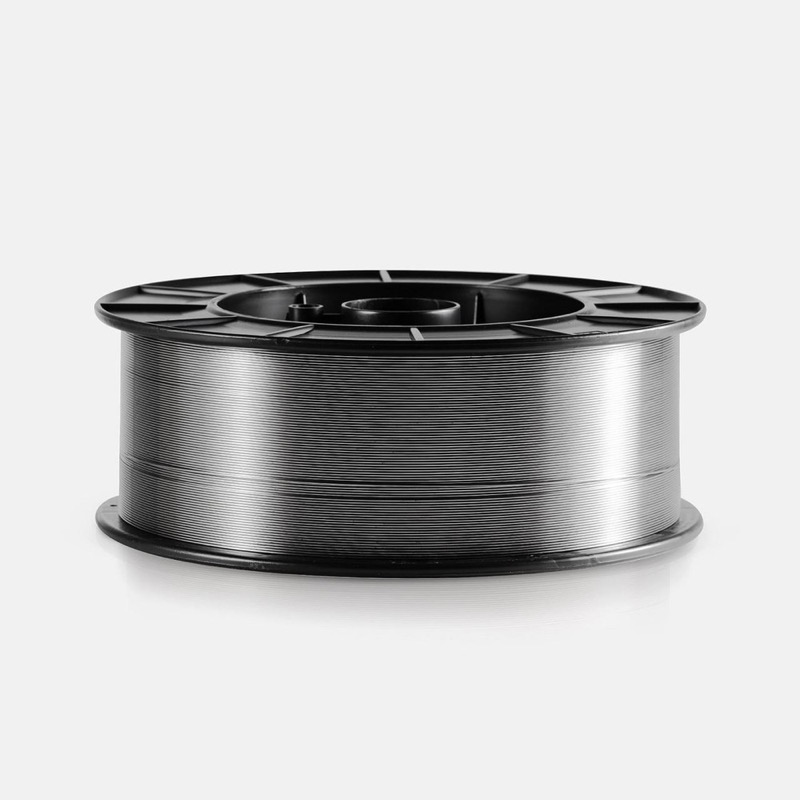
Pick E71T-11 if:
You are welding outdoors in windy conditions. You need a portable setup without a gas cylinder. The application is general-purpose or repair work that does not require code-quality welds.
Runs on DCEN, 30-225A range. E71T-11 full amperage chart
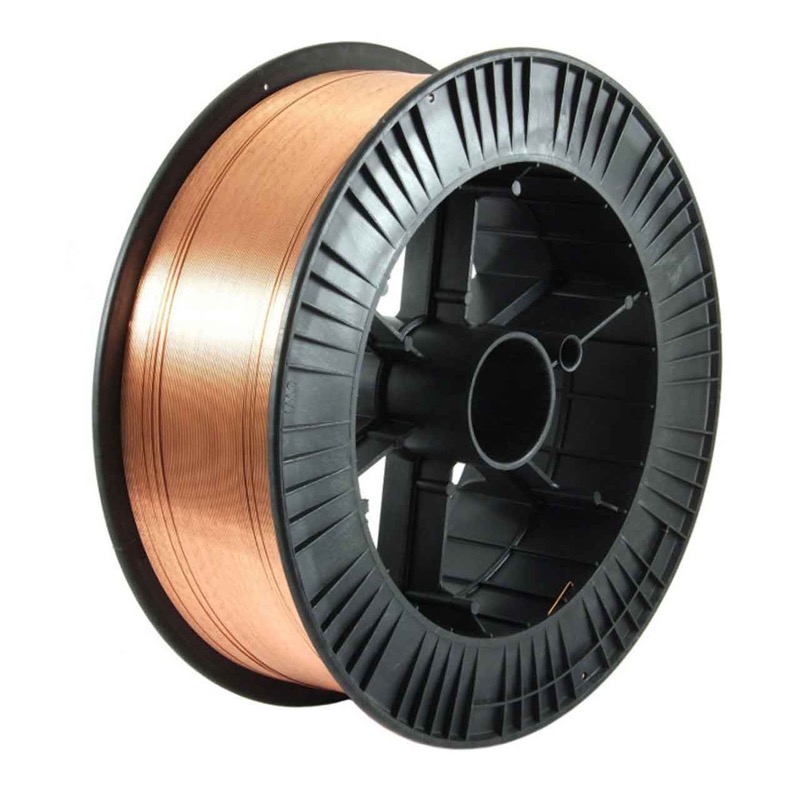
Pick ER70S-6 if:
You are welding indoors or in a controlled environment. You want cleaner welds with less post-weld cleanup. The application requires better mechanical properties or appearance. You are doing production welding where gas cost is offset by faster cleanup.
Runs on DCEP, 30-350A range. ER70S-6 full amperage chart
Spec Comparison
| Attribute | E71T-11 | ER70S-6 |
|---|---|---|
| Shielding gas required | None (self-shielded) | Yes (75/25 Ar/CO2 or 100% CO2) |
| Wind tolerance | Good, designed for outdoor use | Poor, gas shielding disrupted by wind |
| Spatter | Moderate to high | Low to moderate |
| Slag | Yes, requires cleaning between passes | No slag (silicon islands only) |
| Weld appearance | Rougher, wider bead | Smooth, clean bead |
| Equipment needed | Wire feed welder only | Wire feed welder + gas cylinder + regulator |
| Operating cost | Wire only (higher cost per pound) | Wire + gas (lower wire cost, added gas cost) |
Settings at a Glance
Machine settings and operating characteristics side by side. For full amperage charts, see the individual electrode pages.
| Setting | E71T-11 | ER70S-6 |
|---|---|---|
| Polarity | DCEN | DCEP |
| Positions | flat, horizontal, vertical-up, overhead | flat, horizontal, vertical-up, overhead |
| Penetration | medium | medium |
| Coating | self-shielded flux-cored | copper-coated solid wire |
| Amps at 0.030" | 30-130A | 40-145A |
| Amps at 0.035" | 40-175A | 50-220A |
| Amps at 0.045" | 75-225A | 75-350A |
How E71T-11 and ER70S-6 Work Together
This comparison comes up whenever someone asks whether they need a gas bottle. If you weld indoors in a shop with no wind, ER70S-6 with 75/25 gas produces a cleaner, stronger, better-looking weld every time. If you weld outdoors, in the field, or need to move your setup frequently, E71T-11 eliminates the gas bottle entirely. Many farm and ranch welders run E71T-11 exclusively because hauling argon bottles to a fence line is not practical. Production shops almost always run ER70S-6.
Common Mistake With E71T-11
Running E71T-11 with shielding gas, or running ER70S-6 without it. E71T-11 is self-shielded and does not need gas. Adding gas to E71T-11 causes excessive porosity. ER70S-6 requires gas and produces terrible welds without it. Also, do not confuse E71T-11 with E71T-1, which is a gas-shielded flux-core wire.
When It Matters
The Job
You are setting up a wire-feed welder for the first time. You can run either solid MIG wire with gas or self-shielded flux-core. Your shop has no wind but your garage door stays open.
Which Rod Wins
With the door open, wind gusts will blow away your MIG shielding gas and cause porosity. E71T-11 makes its own shield from the flux core. If you can close the door and eliminate drafts, ER70S-6 with 75/25 gas gives you cleaner welds with less spatter and no slag to chip.
Where It Breaks
Running ER70S-6 with the garage door open on a breezy day gives you welds full of porosity. The pinholes weaken the joint and look terrible. You burn through gas fixing problems that flux-core would have avoided.
The Sensory Difference
E71T-11: E71T-11 pops and crackles. The arc is louder and rougher than solid wire. Spatter hits your arms. A dark slag crust forms on the bead that needs chipping. The puddle is wider and more forgiving of gaps.
ER70S-6: ER70S-6 hisses smoothly. The arc is quiet and stable. Minimal spatter. No slag. The bead comes out clean and shiny. The puddle is tighter and less forgiving of poor fit-up.
Where to Start
Many beginners start with E71T-11 because it needs no gas setup. Once you get comfortable with wire feed, add a gas bottle and try ER70S-6. The cleaner welds and less cleanup time are worth the gas cost in a shop setting.
Practical Differences
| Factor | E71T-11 | ER70S-6 |
|---|---|---|
| Shielding Gas | None (self-shielded) | 75% Ar / 25% CO2 |
| Fume Level | High (0.8-1.8 g/min) | Low (0.2-0.5 g/min) |
| Common Brands | Innershield NR-211-MP, Fabshield 21B | SuperArc L-56, HB-28 |
Where to Buy
As an Amazon Associate, GageRef earns from qualifying purchases. These are affiliate links.
E71T-11 vs ER70S-6: Common Questions
Which is better, E71T-11 or ER70S-6?
One is not a replacement for the other. Key differences: Shielding gas required: E71T-11 has none (self-shielded), while ER70S-6 has yes (75/25 ar/co2 or 100% co2). Wind tolerance: E71T-11 has good, designed for outdoor use, while ER70S-6 has poor, gas shielding disrupted by wind. Spatter: E71T-11 has moderate to high, while ER70S-6 has low to moderate. Start with what machine you have and what condition the steel is in.
Can I substitute E71T-11 for ER70S-6?
Check the WPS or code first. E71T-11 runs on DCEN, ER70S-6 on DCEP. Your machine decides. Coating chemistry is different (self-shielded flux-cored vs copper-coated solid wire), so the arc and slag behave differently.
Can I use both E71T-11 and ER70S-6 on the same joint?
This comparison comes up whenever someone asks whether they need a gas bottle. If you weld indoors in a shop with no wind, ER70S-6 with 75/25 gas produces a cleaner, stronger, better-looking weld every time. If you weld outdoors, in the field, or need to move your setup frequently, E71T-11 eliminates the gas bottle entirely. Many farm and ranch welders run E71T-11 exclusively because hauling argon bottles to a fence line is not practical. Production shops almost always run ER70S-6.
Reference data only. Verify all settings against manufacturer documentation and the applicable welding code before use. Amperage ranges are starting points that vary by position, fit-up, and material. Welding involves serious injury risks including burns, electric shock, fume exposure, and fire. This site does not replace proper training, certification, or employer safety procedures. See full terms of use.
Data sourced from AWS A5.20/A5.20M, AWS A5.18/A5.18M.