E6011 vs E7018: Field Penetration Rod vs Structural Low-Hydrogen
E6011 is a deep-penetrating AC-capable rod for dirty metal and field work. E7018 is the smooth, strong, code-quality low-hydrogen rod for structural welding. Different tools for different jobs.
E6011: Welding on rust, paint, or dirty metal. E7018: Clean structural fabrication.
Which One Should You Use?
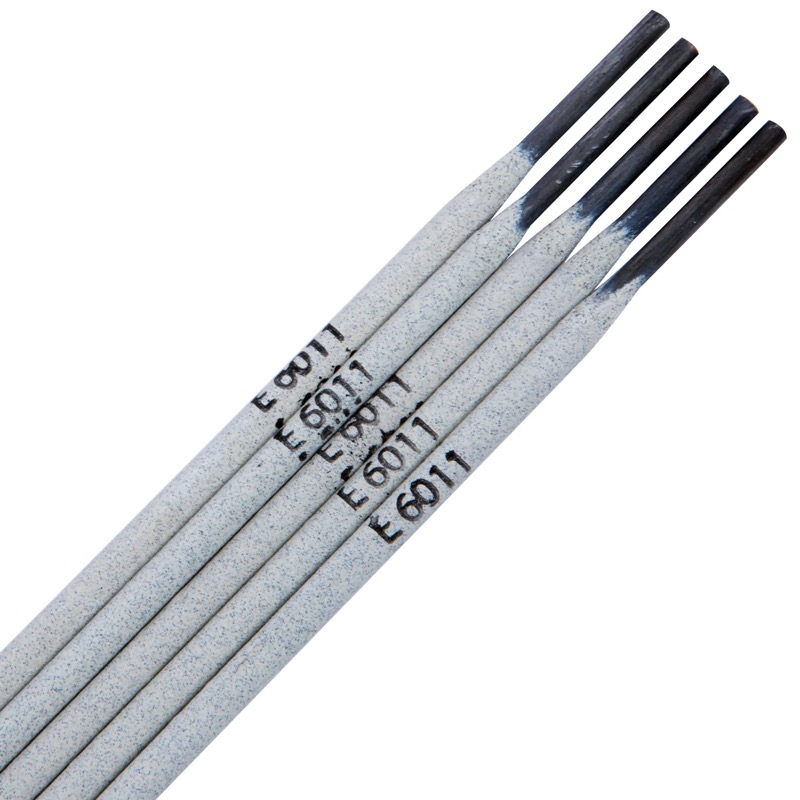
Pick E6011 if:
Welding on rust, paint, or dirty metal. Field repairs on AC machines. Root passes on pipe. Situations where deep penetration through contamination matters more than bead appearance.
Runs on AC, DCEP, 40-320A range. E6011 full amperage chart
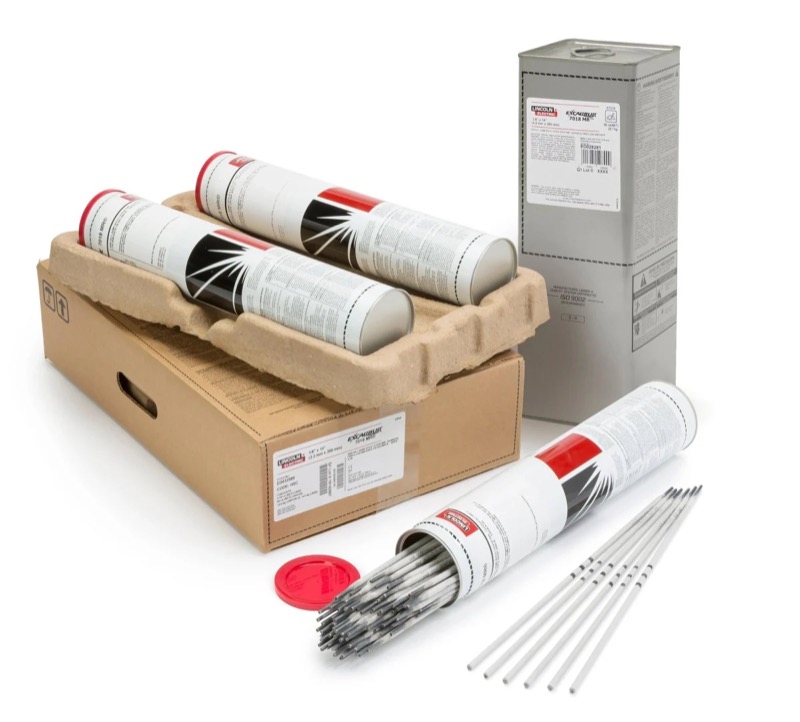
Pick E7018 if:
Clean structural fabrication. D1.1 code work. Pressure vessels. Any application specifying low-hydrogen. Cap passes where appearance and mechanical properties both matter.
Runs on DCEP, AC, 70-400A range. E7018 full amperage chart
Key Differences
| Attribute | E6011 | E7018 |
|---|---|---|
| Difference 1 | E6011 has 60 ksi tensile with deep, aggressive penetration | |
| Difference 2 | E7018 has 70 ksi tensile with medium penetration and smooth arc | |
| Difference 3 | E6011 runs AC or DC | E7018 needs DC or high-OCV AC |
| Difference 4 | E6011 tolerates dirty metal | E7018 needs clean joints |
| Difference 5 | E6011 is high-hydrogen | E7018 is low-hydrogen |
Settings at a Glance
Machine settings and operating characteristics side by side. For full amperage charts, see the individual electrode pages.
| Setting | E6011 | E7018 |
|---|---|---|
| Polarity | AC, DCEP | DCEP, AC |
| Positions | flat, horizontal, vertical-up, vertical-down, overhead | flat, horizontal, vertical-up, overhead |
| Penetration | deep | medium |
| Coating | high cellulose potassium | low-hydrogen iron powder |
| Amps at 3/32" | 40-85A | 70-100A |
| Amps at 1/8" | 75-130A | 90-160A |
| Amps at 5/32" | 100-180A | 130-200A |
How E6011 and E7018 Work Together
Many pipeline welders use E6010/E6011 for the root pass and E7018 for fill and cap passes. The combination leverages the penetration of cellulosic rods and the strength of low-hydrogen rods.
Common Mistake With E6011
Using E6011 where low-hydrogen properties are required. E6011 is a high-hydrogen rod that can cause cracking in thick, restrained, or high-strength joints.
When It Matters
The Job
You are repairing a cracked loader bucket on a farm. The crack is in a structural weld on 3/8-inch plate. The steel is rusty and you are working outside next to the barn.
Which Rod Wins
Grind the crack out to clean metal, then run E7018 for the repair if you can get the joint clean and keep the rods dry. If the rust goes too deep to grind out or you do not have a rod oven, E6011 burns through the contamination and gets the bucket back to work. E7018 is stronger. E6011 is more practical in field conditions.
Where It Breaks
Running E7018 on a joint you did not clean puts hydrogen-trapping contaminants in a low-hydrogen weld. You get porosity and lose the strength advantage you picked E7018 for in the first place.
In Your Hands
E6011: E6011 digs and pops. The arc is aggressive and cuts through surface contamination. The bead is rough with coarse ripples. You fight the rod but it fights the rust harder.
E7018: E7018 glides. The smooth arc and heavy slag produce a clean, professional-looking bead. On clean metal, it is the better rod in every measurable way. On dirty metal, it falls apart.
Which to Learn First
Most welders learn E7018 in school and E6011 in the field. If you can only practice one, pick E7018 for the certification test. Learn E6011 on the job when the first repair does not go as planned.
Practical Differences
| Factor | E6011 | E7018 |
|---|---|---|
| Fume Level | High (0.8-1.5 g/min) | Medium-Low (0.3-0.6 g/min) |
| Storage | Standard dry storage | Rod oven required |
| Common Brands | Fleetweld 35LS, Hobart 335A | Excalibur 7018 MR, Jetweld LH-78MR |
Where to Buy
As an Amazon Associate, GageRef earns from qualifying purchases. These are affiliate links.
E6011 vs E7018: Common Questions
Which is better, E6011 or E7018?
One is not a replacement for the other. Key differences: Difference 1: E6011 has e6011 has 60 ksi tensile with deep, aggressive penetration, while E7018 has . Difference 2: E6011 has e7018 has 70 ksi tensile with medium penetration and smooth arc, while E7018 has . Difference 3: E6011 has e6011 runs ac or dc, while E7018 has e7018 needs dc or high-ocv ac. Start with what machine you have and what condition the steel is in.
Can I substitute E6011 for E7018?
Check the WPS or code first. E6011 runs on AC/DCEP, E7018 on DCEP/AC. Your machine decides. Penetration differs: E6011 is deep, E7018 is medium. Coating chemistry is different (high cellulose potassium vs low-hydrogen iron powder), so the arc and slag behave differently.
Can I use both E6011 and E7018 on the same joint?
Many pipeline welders use E6010/E6011 for the root pass and E7018 for fill and cap passes. The combination leverages the penetration of cellulosic rods and the strength of low-hydrogen rods.
Reference data only. Verify all settings against manufacturer documentation and the applicable welding code before use. Amperage ranges are starting points that vary by position, fit-up, and material. Welding involves serious injury risks including burns, electric shock, fume exposure, and fire. This site does not replace proper training, certification, or employer safety procedures. See full terms of use.
Data sourced from AWS A5.1.