E6010 vs E7018: Root Pass vs Fill and Cap
These two rods are partners, not competitors. E6010 burns the root pass on pipe, hot, deep, through dirty steel. E7018 fills and caps the joint with a smooth, low-hydrogen deposit that passes X-ray. Most pipe welding procedures call for both.
E6010: You need full penetration on an open root joint, are welding in field conditions on imperfect steel, or are doing pipe root passes. E7018: You need X-ray quality welds meeting structural or pressure vessel code.
Which One Should You Use?
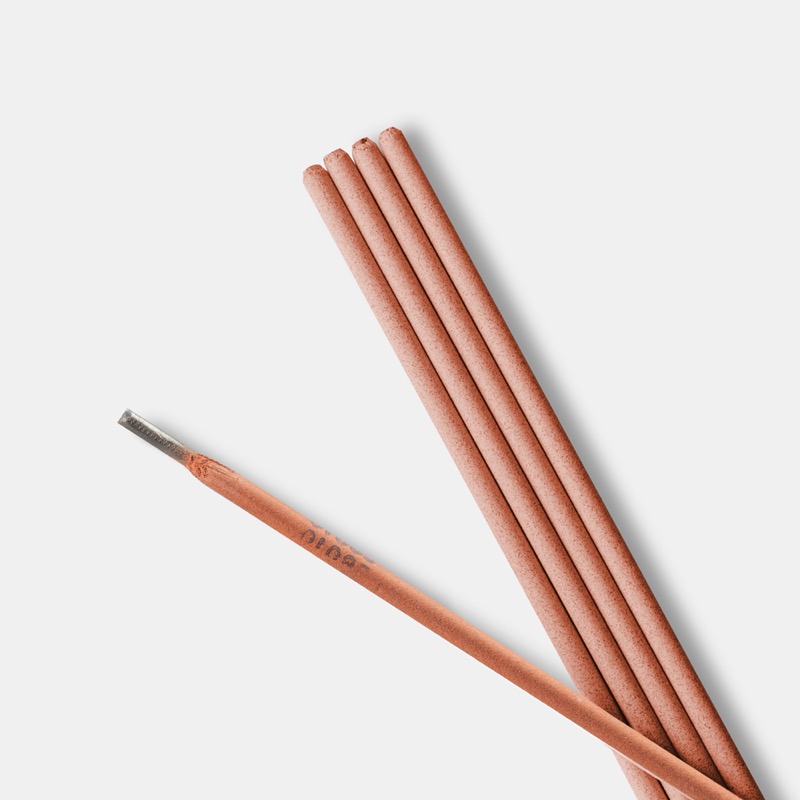
Pick E6010 if:
You need full penetration on an open root joint, are welding in field conditions on imperfect steel, or are doing pipe root passes. E6010 is the go-to root pass rod for pipeline welding.
Runs on DCEP, 40-320A range. E6010 full amperage chart
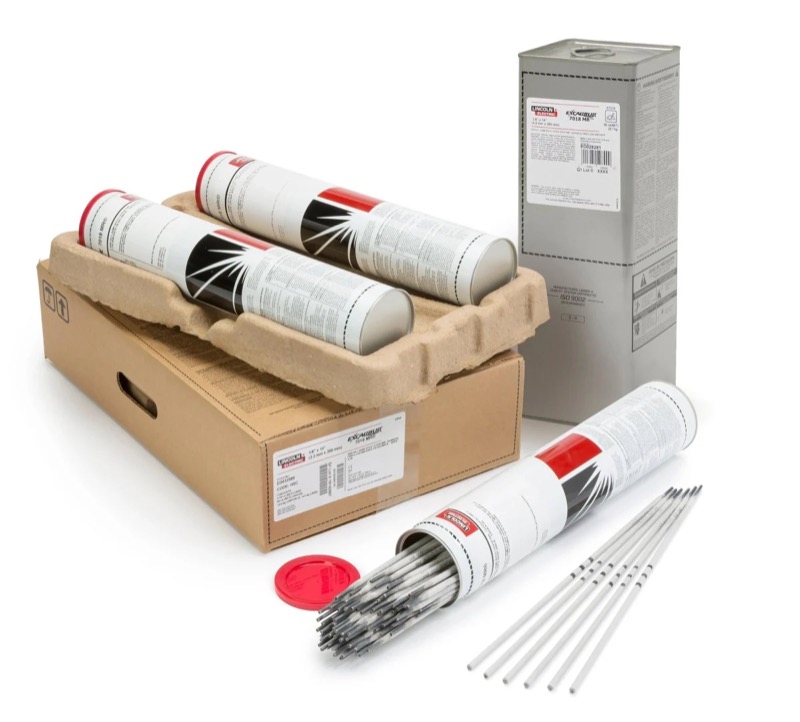
Pick E7018 if:
You need X-ray quality welds meeting structural or pressure vessel code. You are doing fill and cap passes on properly prepared joints. You need high-strength, low-hydrogen deposits with good impact toughness at low temperatures.
Runs on DCEP, AC, 70-400A range. E7018 full amperage chart
Side by Side
| Attribute | E6010 | E7018 |
|---|---|---|
| Penetration | Deep, aggressive arc dig | Medium, smooth arc |
| Tensile strength | 60,000 psi | 70,000 psi |
| Slag type | Thin, fast-freeze, negligible coverage | Heavy, self-peeling, full coverage |
| Surface tolerance | Tolerates rust, oil, mill scale, paint | Requires clean, dry, well-prepared joint |
| Storage | Standard dry storage, no reconditioning | Rod oven required (250-300F), moisture sensitive |
| Hydrogen level | High (cellulosic coating generates hydrogen) | Low (H4 or H8 diffusible hydrogen class) |
| Typical application | Pipe root passes, field repairs | Structural steel, pressure vessels, code work |
| Operator skill | Requires significant technique to control | Easier to run with a smooth, forgiving arc |
Settings at a Glance
Machine settings and operating characteristics side by side. For full amperage charts, see the individual electrode pages.
| Setting | E6010 | E7018 |
|---|---|---|
| Polarity | DCEP | DCEP, AC |
| Positions | flat, horizontal, vertical-up, vertical-down, overhead | flat, horizontal, vertical-up, overhead |
| Penetration | deep | medium |
| Coating | high cellulose sodium | low-hydrogen iron powder |
| Amps at 3/32" | 40-80A | 70-100A |
| Amps at 1/8" | 75-130A | 90-160A |
| Amps at 5/32" | 100-180A | 130-200A |
How E6010 and E7018 Work Together
On most structural pipe jobs, the procedure (WPS) calls for E6010 on the root and hot pass, then E7018 for the fill and cap. The E6010 burns in deep and creates the fusion. The E7018 builds up the joint with low-hydrogen deposits that will not crack under service loads. Trying to root with E7018 does not work well because it lacks the dig to burn through a root opening. Trying to fill with E6010 is wasteful because the deposition rate is low and the hydrogen content is high.
Common Mistake With E6010
New welders sometimes reach for E7018 for every joint because it is the 'good' rod. But E7018 on dirty, rusty field steel will give you porosity and poor fusion. That is what E6010 is for. Match the rod to the condition of the steel and the stage of the weld, not just the required strength.
Real-World Scenario
The Situation
You are standing at a 6-inch carbon steel pipe joint in the field. The root is open, the bevel is ground, and the fit-up is tight. Your WPS calls for a root pass and three fill passes.
The Call
E6010 burns the root. It digs through the back side of the joint and creates the keyhole you need for full penetration. Once the root and hot pass are in, switch to E7018 for the fill and cap. The low-hydrogen deposit gives you the strength and X-ray quality the inspector needs.
What Goes Wrong
If you try to root with E7018, the arc sits on the surface instead of burning through. You get lack of fusion on the back side. If you fill with E6010, the high hydrogen content risks delayed cracking under load.
How They Feel
E6010: E6010 snaps and crackles like a live wire hitting wet ground. The rod vibrates in your hand. The puddle is small and freezes fast. You feel every movement transmitted through the electrode holder.
E7018: E7018 hums. The arc is cushioned by the iron powder coating. The rod melts smoothly and the puddle flows like warm honey. Your hand stays relaxed. The slag peels off in sheets.
The Learning Path
Learn E7018 first to build confidence with arc control and bead placement. Move to E6010 when you start pipe welding or field repairs that demand penetration through dirty steel.
Practical Differences
| Factor | E6010 | E7018 |
|---|---|---|
| Fume Level | High (0.8-1.5 g/min) | Medium-Low (0.3-0.6 g/min) |
| Storage | Standard dry storage | Rod oven required |
| Common Brands | Fleetweld 5P+, Hobart 610 | Excalibur 7018 MR, Jetweld LH-78MR |
Where to Buy
As an Amazon Associate, GageRef earns from qualifying purchases. These are affiliate links.
E6010 vs E7018: Common Questions
Which is better, E6010 or E7018?
Different rods for different jobs. Key differences: Penetration: E6010 has deep, aggressive arc dig, while E7018 has medium, smooth arc. Tensile strength: E6010 has 60,000 psi, while E7018 has 70,000 psi. Slag type: E6010 has thin, fast-freeze, negligible coverage, while E7018 has heavy, self-peeling, full coverage. Match the rod to the work, not the other way around.
Can I substitute E6010 for E7018?
Not a straight swap. E6010 runs on DCEP, E7018 on DCEP/AC. Your machine decides. Penetration differs: E6010 is deep, E7018 is medium. Coating chemistry is different (high cellulose sodium vs low-hydrogen iron powder), so the arc and slag behave differently.
Can I use both E6010 and E7018 on the same joint?
On most structural pipe jobs, the procedure (WPS) calls for E6010 on the root and hot pass, then E7018 for the fill and cap. The E6010 burns in deep and creates the fusion. The E7018 builds up the joint with low-hydrogen deposits that will not crack under service loads. Trying to root with E7018 does not work well because it lacks the dig to burn through a root opening. Trying to fill with E6010 is wasteful because the deposition rate is low and the hydrogen content is high.
Reference data only. Verify all settings against manufacturer documentation and the applicable welding code before use. Amperage ranges are starting points that vary by position, fit-up, and material. Welding involves serious injury risks including burns, electric shock, fume exposure, and fire. This site does not replace proper training, certification, or employer safety procedures. See full terms of use.
Data sourced from AWS A5.1/A5.1M.