Structural Stick Rod vs MIG Wire for Mild Steel
E7018 low-hydrogen stick vs ER70S-6 MIG wire. The two most popular carbon steel filler metals compared across process lines.
Which One Should You Use?
Key Differences
| Attribute | E7018 | ER70S-6 |
|---|---|---|
| Process | Stick (SMAW) | MIG (GMAW) |
| Hydrogen | Low hydrogen (H4-H8) | Inherently low-hydrogen process (no H-designator needed) |
| Code Status | AWS D1.1 prequalified SMAW | AWS D1.1 prequalified GMAW |
| Speed | Moderate - rod changes slow | Fast - continuous wire |
| Cleanup | Heavy slag - must chip | No slag - minimal spatter |
| Wind Tolerance | Excellent | Poor - gas blown away |
| Equipment Cost | Low - basic stick welder | Higher - wire feeder + gas |
| Skill Required | Higher - arc management | Lower - automatic wire feed |
| Storage | Rod oven required | No special storage |
Settings at a Glance
Machine settings and operating characteristics side by side. For full amperage charts, see the individual electrode pages.
| Setting | E7018 | ER70S-6 |
|---|---|---|
| Polarity | DCEP, AC | DCEP |
| Positions | flat, horizontal, vertical-up, overhead | flat, horizontal, vertical-up, overhead |
| Penetration | medium | medium |
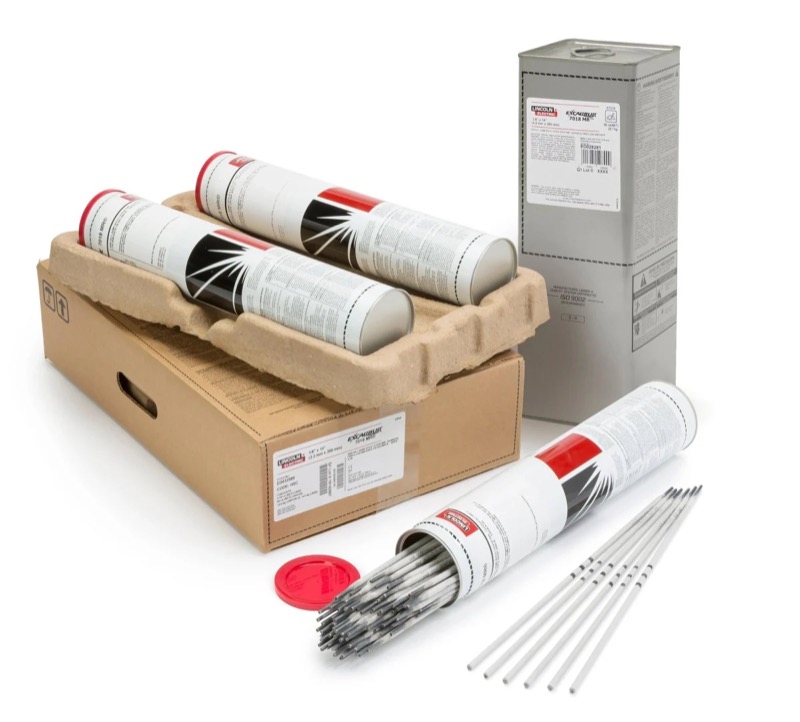
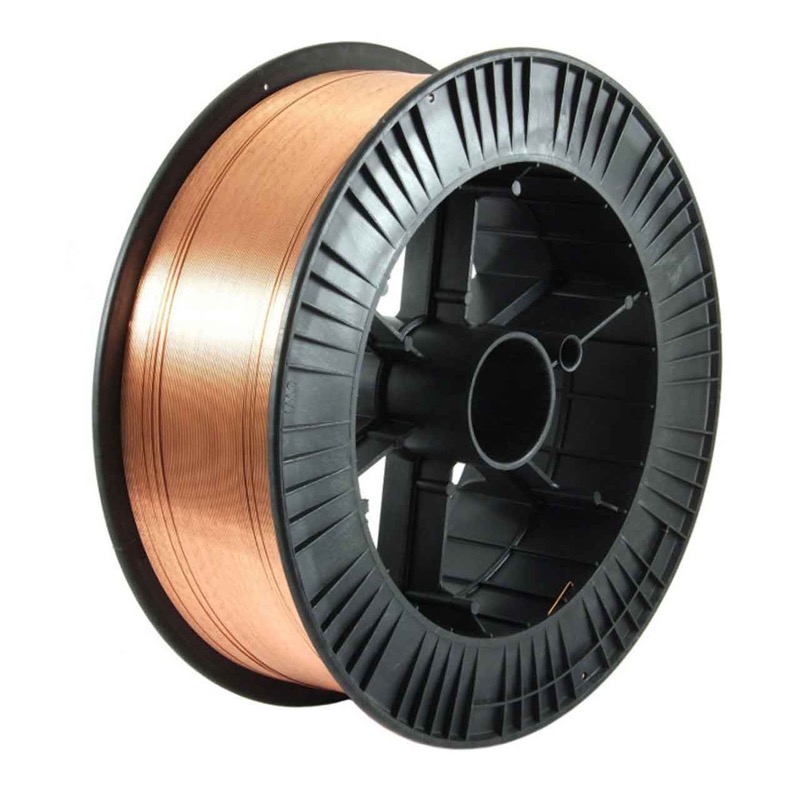
| Coating | low-hydrogen iron powder | copper-coated solid wire |
| Amps at 3/32" | 70-100A | N/A |
| Amps at 1/8" | 90-160A | N/A |
| Amps at 0.023" | N/A | 30-90A |
| Amps at 0.030" | N/A | 40-145A |
How E7018 and ER70S-6 Work Together
E7018 stick and ER70S-6 MIG are the two most used carbon steel welding consumables in North America. For structural code work outdoors, E7018 dominates because it needs no gas and is AWS D1.1 prequalified. For shop fabrication, ER70S-6 MIG is faster and cleaner. Many shops use MIG for light and medium fabrication, then switch to E7018 stick for heavy structural or field work. Both produce high-quality welds when used correctly.
Common Mistake With Structural Stick Rod
Using ER70S-6 MIG as a substitute for E7018 stick on code work without verifying the WPS allows GMAW. Some structural codes and fabrication specifications require SMAW (stick) with low-hydrogen electrodes. MIG is not automatically interchangeable even though the weld strength is similar.
Practical Differences
| Factor | E7018 | ER70S-6 |
|---|---|---|
| Shielding Gas | None (flux-shielded) | 75% Ar / 25% CO2 |
| Fume Level | Medium-Low (0.3-0.6 g/min) | Low (0.2-0.5 g/min) |
| Storage | Rod oven required | Dry, sealed spool |
| Common Brands | Excalibur 7018 MR, Jetweld LH-78MR | SuperArc L-56, HB-28 |
Where to Buy
As an Amazon Associate, GageRef earns from qualifying purchases. These are affiliate links.
E7018 vs ER70S-6: Common Questions
Which is better, E7018 or ER70S-6?
Wrong question. They solve different problems. Key differences: Process: E7018 has stick (smaw), while ER70S-6 has mig (gmaw). Hydrogen: E7018 has low hydrogen (h4-h8), while ER70S-6 has inherently low-hydrogen process (no h-designator needed). Code Status: E7018 has aws d1.1 prequalified smaw, while ER70S-6 has aws d1.1 prequalified gmaw. The comparison table on this page breaks down each trade-off.
Can I substitute E7018 for ER70S-6?
Only if the specs allow it. E7018 runs on DCEP/AC, ER70S-6 on DCEP. Your machine decides. Coating chemistry is different (low-hydrogen iron powder vs copper-coated solid wire), so the arc and slag behave differently.
Can I use both E7018 and ER70S-6 on the same joint?
E7018 stick and ER70S-6 MIG are the two most used carbon steel welding consumables in North America. For structural code work outdoors, E7018 dominates because it needs no gas and is AWS D1.1 prequalified. For shop fabrication, ER70S-6 MIG is faster and cleaner. Many shops use MIG for light and medium fabrication, then switch to E7018 stick for heavy structural or field work. Both produce high-quality welds when used correctly.
Reference data only. Verify all settings against manufacturer documentation and the applicable welding code before use. Amperage ranges are starting points that vary by position, fit-up, and material. Welding involves serious injury risks including burns, electric shock, fume exposure, and fire. This site does not replace proper training, certification, or employer safety procedures. See full terms of use.
Data sourced from AWS A5.1/A5.1M, AWS A5.18/A5.18M.