Cellulose Stick vs Self-Shielded Flux-Core for Field Welding
E6010 stick vs E71T-11 self-shielded flux-core for outdoor and field repair. Both work without gas but handle very differently.
Which One Should You Use?
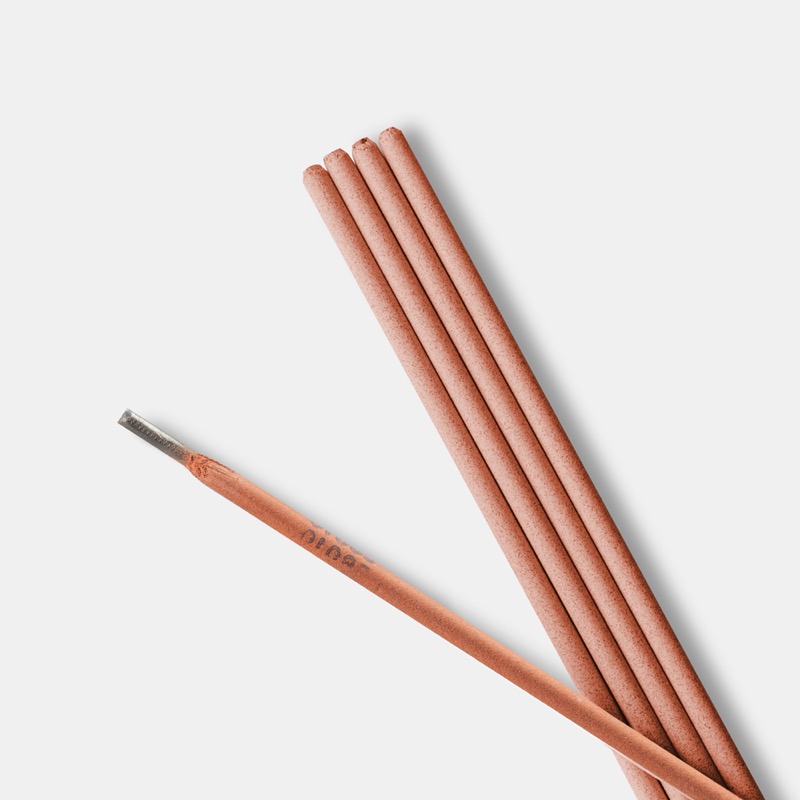
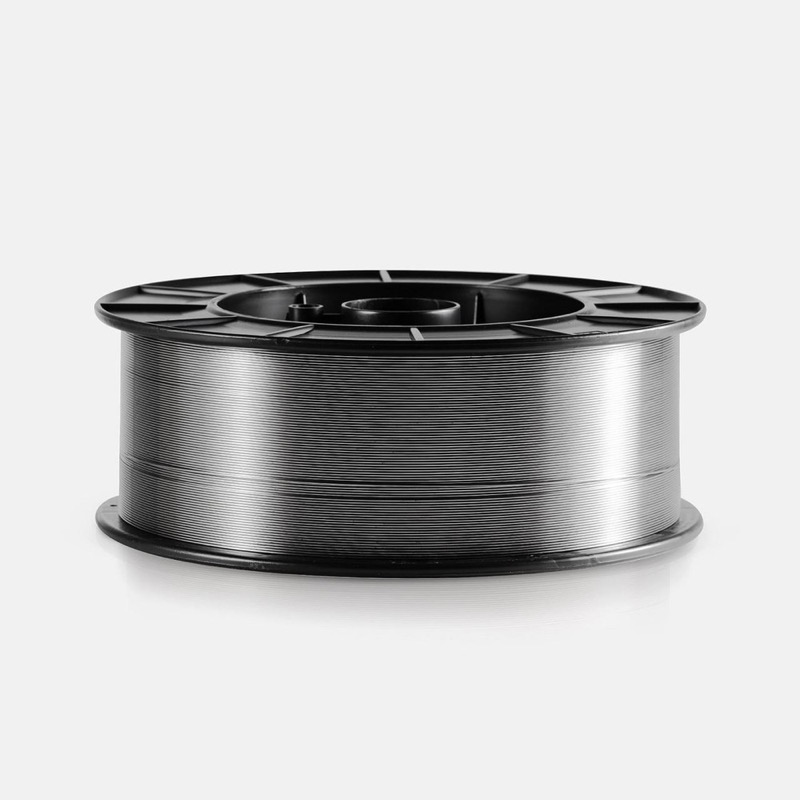
Key Differences
| Attribute | E6010 | E71T-11 |
|---|---|---|
| Process | Stick - manual rod | Self-shielded flux-core - wire feed |
| Penetration Control | Excellent - tight arc digs deep | Good but less operator control |
| Deposition Rate | Low - frequent rod changes | Higher - continuous wire feed |
| Polarity | DCEP only | DCEN (check manufacturer spec) |
| Dirty Metal Tolerance | Excellent - burns through rust and paint | Good - flux helps but less aggressive |
| Equipment | Simple DC stick welder | Wire feeder with polarity swap capability |
| Root Pass Capability | Excellent - standard for pipe roots | Poor - too much deposition for root control |
| Wind Tolerance | Excellent | Excellent (no external gas) |
Settings at a Glance
Machine settings and operating characteristics side by side. For full amperage charts, see the individual electrode pages.
| Setting | E6010 | E71T-11 |
|---|---|---|
| Polarity | DCEP | DCEN |
| Positions | flat, horizontal, vertical-up, vertical-down, overhead | flat, horizontal, vertical-up, overhead |
| Penetration | deep | medium |
| Coating | high cellulose sodium | self-shielded flux-cored |
| Amps at 3/32" | 40-80A | N/A |
| Amps at 1/8" | 75-130A | N/A |
| Amps at 0.030" | N/A | 30-130A |
| Amps at 0.035" | N/A | 40-175A |
How E6010 and E71T-11 Work Together
E6010 gives the welder total control of penetration through arc length and manipulation. E71T-11 provides faster deposition for fill passes. Many pipeline and structural field crews use E6010 for root passes and switch to self-shielded flux-core for fill and cap. E6010 requires a DC welder with good arc force control. E71T-11 needs a wire feeder but can be run by less experienced operators.
Common Mistake With Cellulose Stick
Running E71T-11 with DCEP polarity. Most self-shielded flux-core wires require DCEN (electrode negative). Running DCEP causes excessive spatter, poor penetration, and porosity. Always check the wire manufacturer polarity recommendation.
Practical Differences
| Factor | E6010 | E71T-11 |
|---|---|---|
| Shielding Gas | None (flux-shielded) | None (self-shielded) |
| Storage | Standard dry storage | Dry, sealed spool |
| Common Brands | Fleetweld 5P+, Hobart 610 | Innershield NR-211-MP, Fabshield 21B |
Where to Buy
As an Amazon Associate, GageRef earns from qualifying purchases. These are affiliate links.
E6010 vs E71T-11: Common Questions
Which is better, E6010 or E71T-11?
One is not a replacement for the other. Key differences: Process: E6010 has stick - manual rod, while E71T-11 has self-shielded flux-core - wire feed. Penetration Control: E6010 has excellent - tight arc digs deep, while E71T-11 has good but less operator control. Deposition Rate: E6010 has low - frequent rod changes, while E71T-11 has higher - continuous wire feed. Start with what machine you have and what condition the steel is in.
Can I substitute E6010 for E71T-11?
Check the WPS or code first. E6010 runs on DCEP, E71T-11 on DCEN. Your machine decides. Penetration differs: E6010 is deep, E71T-11 is medium. Coating chemistry is different (high cellulose sodium vs self-shielded flux-cored), so the arc and slag behave differently.
Can I use both E6010 and E71T-11 on the same joint?
E6010 gives the welder total control of penetration through arc length and manipulation. E71T-11 provides faster deposition for fill passes. Many pipeline and structural field crews use E6010 for root passes and switch to self-shielded flux-core for fill and cap. E6010 requires a DC welder with good arc force control. E71T-11 needs a wire feeder but can be run by less experienced operators.
Reference data only. Verify all settings against manufacturer documentation and the applicable welding code before use. Amperage ranges are starting points that vary by position, fit-up, and material. Welding involves serious injury risks including burns, electric shock, fume exposure, and fire. This site does not replace proper training, certification, or employer safety procedures. See full terms of use.
Data sourced from AWS A5.1/A5.1M, AWS A5.20/A5.20M.