E6013 vs E7018: Light Fabrication vs Structural Code
Two of the most common shop rods, but they exist in different worlds. E6013 is for beginners and thin clean steel. E7018 is for structural code work. The question is not which is better, it is whether your weld needs to meet code.
E6013: You are welding non-structural, non-critical joints on clean thin material. E7018: The weld must pass visual, bend, or X-ray inspection.
Which One Should You Use?
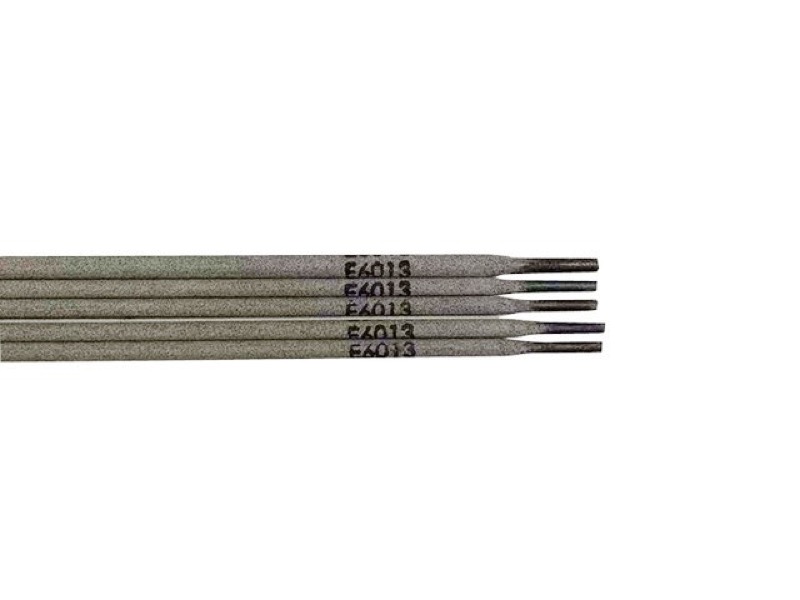
Pick E6013 if:
You are welding non-structural, non-critical joints on clean thin material. You do not have a rod oven or controlled storage. You are practicing or doing light hobby work.
Runs on AC, DCEP, DCEN, 40-300A range. E6013 full amperage chart
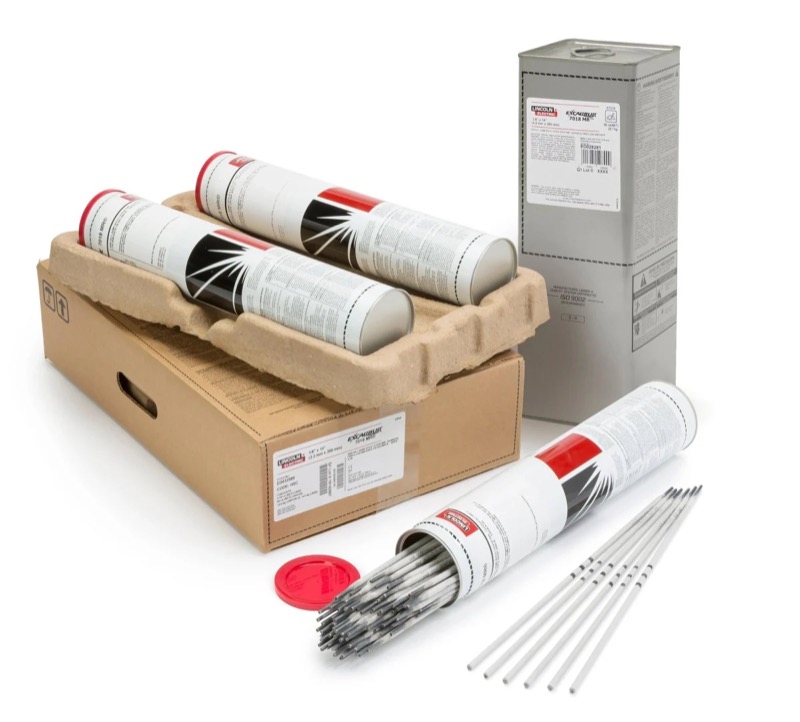
Pick E7018 if:
The weld must pass visual, bend, or X-ray inspection. You are welding to any structural, pressure, or pipeline code. You need low-hydrogen deposits to prevent cracking. The application is load-bearing or safety-critical.
Runs on DCEP, AC, 70-400A range. E7018 full amperage chart
Spec Comparison
| Attribute | E6013 | E7018 |
|---|---|---|
| Tensile strength | 60,000 psi | 70,000 psi |
| Impact toughness | Not specified by AWS | 20 ft-lbs at -20F |
| Hydrogen level | Standard (not controlled) | Low hydrogen (H4 or H8 class) |
| Storage requirements | Standard dry storage | Rod oven required after opening |
| Penetration | Light | Medium |
| Ease of use | Very easy, forgiving | Easy but requires tighter arc length |
| Code acceptance | Limited, not for structural code work | AWS D1.1, ASME, API accepted |
Settings at a Glance
Machine settings and operating characteristics side by side. For full amperage charts, see the individual electrode pages.
| Setting | E6013 | E7018 |
|---|---|---|
| Polarity | AC, DCEP, DCEN | DCEP, AC |
| Positions | flat, horizontal, vertical-up, overhead | flat, horizontal, vertical-up, overhead |
| Penetration | light | medium |
| Coating | high titania potassium | low-hydrogen iron powder |
| Amps at 3/32" | 40-90A | 70-100A |
| Amps at 1/8" | 70-120A | 90-160A |
| Amps at 5/32" | 105-180A | 130-200A |
How E6013 and E7018 Work Together
These two rods overlap in school settings because both run smooth and are relatively easy to learn. But in the real world they serve different markets. E6013 lives in light fabrication, hobby welding, and auto body work where penetration requirements are low and appearance matters. E7018 lives in structural steel, pressure vessels, and anywhere a weld inspector will check your work. A shop that only stocks one rod usually stocks E7018. A home welder who only stocks one rod usually stocks E6013.
Common Mistake With E6013
Using E6013 on load-bearing joints is a liability issue. E6013 has lower tensile strength (60 ksi vs 70 ksi) and its shallow penetration means the weld may not fully fuse the base metal. If a joint needs to carry load, E7018 is the minimum standard. If you are not sure whether a joint is structural, treat it as structural.
On the Job
The Setup
You are building a steel workbench in your garage shop. The joints are 1/4-inch angle iron, ground clean, and tacked in position. You have both rods in the shop.
The Decision
E7018 gives you 70,000 psi tensile and full penetration on properly prepared joints. For a workbench that will hold hundreds of pounds, E7018 is the right call. E6013 would make prettier beads but at 60,000 psi with shallow penetration, the joint is weaker.
The Wrong Pick
Using E6013 on structural joints gives you welds that look professional but break under load. The shallow penetration means the weld is sitting on top of the metal instead of fusing into it.
The Sensory Difference
E6013: E6013 whispers. The arc is quiet, the puddle is wide, and the slag flows like a blanket behind you. Everything feels easy and controlled. The bead looks great even on your first pass.
E7018: E7018 has more presence. The arc hums steadily, the puddle is larger, and the heavy slag covers everything. There is more drag on the rod. The bead is not as pretty but the fusion is deeper and the joint is stronger.
Where to Start
Start on E6013 to learn hand coordination and bead placement. Once you can run consistent beads, switch to E7018. You will notice the heavier slag and stiffer arc immediately. Give it 20 rods before judging.
Practical Differences
| Factor | E6013 | E7018 |
|---|---|---|
| Fume Level | Medium (0.4-0.7 g/min) | Medium-Low (0.3-0.6 g/min) |
| Storage | Standard dry storage | Rod oven required |
| Common Brands | Fleetweld 37, Hobart 413 | Excalibur 7018 MR, Jetweld LH-78MR |
Where to Buy
As an Amazon Associate, GageRef earns from qualifying purchases. These are affiliate links.
E6013 vs E7018: Common Questions
Which is better, E6013 or E7018?
It depends on the joint and your equipment. Key differences: Tensile strength: E6013 has 60,000 psi, while E7018 has 70,000 psi. Impact toughness: E6013 has not specified by aws, while E7018 has 20 ft-lbs at -20f. Hydrogen level: E6013 has standard (not controlled), while E7018 has low hydrogen (h4 or h8 class). Check the spec differences above and pick based on your actual situation.
Can I substitute E6013 for E7018?
No. Different rod, different behavior. E6013 runs on AC/DCEP/DCEN, E7018 on DCEP/AC. Your machine decides. Penetration differs: E6013 is light, E7018 is medium. Coating chemistry is different (high titania potassium vs low-hydrogen iron powder), so the arc and slag behave differently.
Can I use both E6013 and E7018 on the same joint?
These two rods overlap in school settings because both run smooth and are relatively easy to learn. But in the real world they serve different markets. E6013 lives in light fabrication, hobby welding, and auto body work where penetration requirements are low and appearance matters. E7018 lives in structural steel, pressure vessels, and anywhere a weld inspector will check your work. A shop that only stocks one rod usually stocks E7018. A home welder who only stocks one rod usually stocks E6013.
Reference data only. Verify all settings against manufacturer documentation and the applicable welding code before use. Amperage ranges are starting points that vary by position, fit-up, and material. Welding involves serious injury risks including burns, electric shock, fume exposure, and fire. This site does not replace proper training, certification, or employer safety procedures. See full terms of use.
Data sourced from AWS A5.1/A5.1M.