Seismic-Rated vs General-Purpose Self-Shielded Flux-Core
E71T-8 seismic-rated structural wire vs E71T-11 general-purpose self-shielded. Both need no gas but serve different markets.
Which One Should You Use?
Pick E71T-8 if:
Runs on DCEN, 130-350A range. E71T-8 full amperage chart
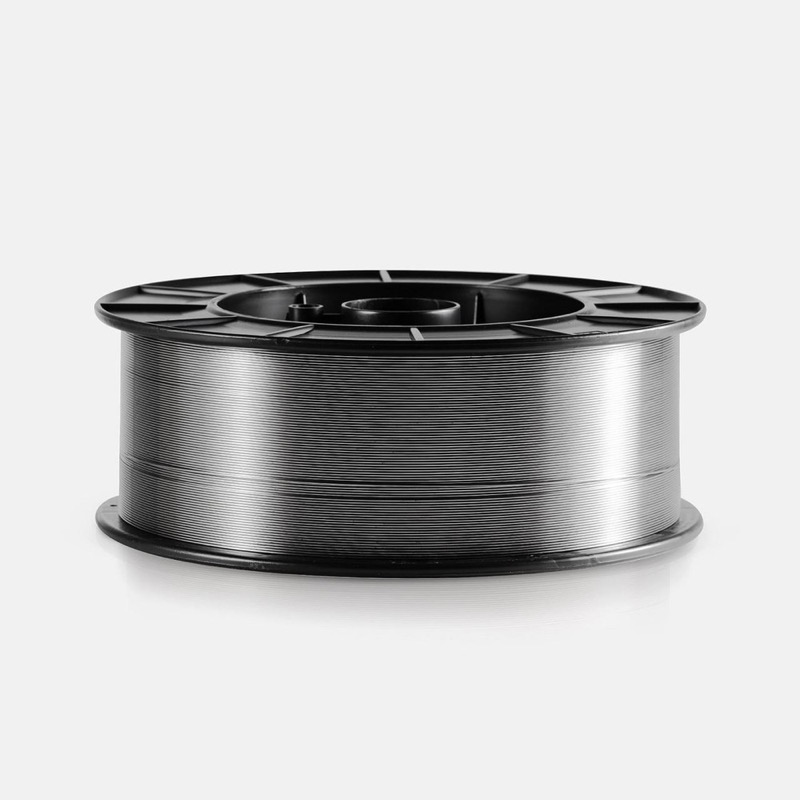
Key Differences
| Attribute | E71T-8 | E71T-11 |
|---|---|---|
| Code Compliance | AWS D1.1 and D1.8 seismic | General purpose - not prequalified |
| Impact Testing | 20 ft-lbs at -20F required | Not required |
| Target Market | Professional structural erection | Hobby, farm, light fabrication |
| Wire Diameter Range | 0.045" to 5/64" (heavier) | 0.030" to 0.045" (lighter) |
| Cost | Significantly higher | Budget friendly |
| Availability | Welding supply distributors | Hardware stores, Amazon |
| Polarity | DCEN | DCEN |
| Fume Level | Moderate to high | High |
Settings at a Glance
Machine settings and operating characteristics side by side. For full amperage charts, see the individual electrode pages.
| Setting | E71T-8 | E71T-11 |
|---|---|---|
| Polarity | DCEN | DCEN |
| Positions | flat, horizontal, vertical-up, overhead | flat, horizontal, vertical-up, overhead |
| Penetration | medium-deep | medium |
| Coating | self-shielded flux core | self-shielded flux-cored |
| Amps at 0.045" | 130-230A | 75-225A |
How E71T-8 and E71T-11 Work Together
E71T-11 is the hobby and light fabrication self-shielded wire that comes with most consumer wire feeders. E71T-8 is the professional structural wire used in building erection. E71T-8 meets AWS D1.8 seismic requirements and has mandatory -20F impact testing. E71T-11 has no impact test requirement. For non-code farm and shop work, E71T-11 is fine. For structural steel, use E71T-8.
Common Mistake With Seismic-Rated
Using E71T-11 on structural code work because it was available. E71T-11 does not meet seismic demand classification and may not pass the impact requirements of the WPS. Structural inspectors will reject it.
Practical Differences
| Factor | E71T-8 | E71T-11 |
|---|---|---|
| Common Brands | Innershield NR-232, Fabshield 71T-8 | Innershield NR-211-MP, Fabshield 21B |
Where to Buy
As an Amazon Associate, GageRef earns from qualifying purchases. These are affiliate links.
E71T-8 vs E71T-11: Common Questions
Which is better, E71T-8 or E71T-11?
It depends on the joint and your equipment. Key differences: Code Compliance: E71T-8 has aws d1.1 and d1.8 seismic, while E71T-11 has general purpose - not prequalified. Impact Testing: E71T-8 has 20 ft-lbs at -20f required, while E71T-11 has not required. Target Market: E71T-8 has professional structural erection, while E71T-11 has hobby, farm, light fabrication. Check the spec differences above and pick based on your actual situation.
Can I substitute E71T-8 for E71T-11?
No. Different rod, different behavior. Penetration differs: E71T-8 is medium-deep, E71T-11 is medium. Coating chemistry is different (self-shielded flux core vs self-shielded flux-cored), so the arc and slag behave differently.
Can I use both E71T-8 and E71T-11 on the same joint?
E71T-11 is the hobby and light fabrication self-shielded wire that comes with most consumer wire feeders. E71T-8 is the professional structural wire used in building erection. E71T-8 meets AWS D1.8 seismic requirements and has mandatory -20F impact testing. E71T-11 has no impact test requirement. For non-code farm and shop work, E71T-11 is fine. For structural steel, use E71T-8.
Reference data only. Verify all settings against manufacturer documentation and the applicable welding code before use. Amperage ranges are starting points that vary by position, fit-up, and material. Welding involves serious injury risks including burns, electric shock, fume exposure, and fire. This site does not replace proper training, certification, or employer safety procedures. See full terms of use.
Data sourced from AWS A5.20/A5.20M.