All-Position Penetration vs Flat High-Deposition Stick Rod
E6010 aggressive digging rod vs E6020 heavy fill rod. Opposite specializations in the 60xx series.
Which One Should You Use?
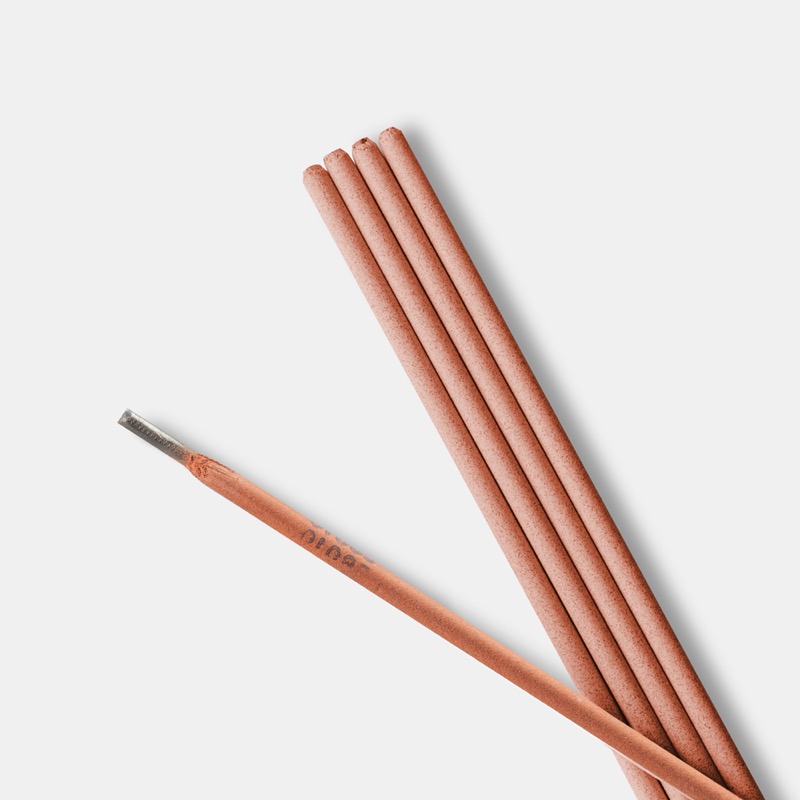
Pick E6020 if:
Runs on AC, DCEN, 100-425A range. E6020 full amperage chart
Key Differences
| Attribute | E6010 | E6020 |
|---|---|---|
| Positions | All - flat, vertical, overhead | Flat and horizontal only |
| Penetration | Very deep, aggressive | Medium to deep in flat |
| Deposition Rate | Low | Very high - heavy iron oxide coating |
| Arc Character | Tight, forceful, digging | Spray-type, heavy deposition |
| Dirty Metal | Excellent | Moderate |
| Best Use | Root passes, pipe, field repair | Flat fill passes, heavy plate |
| Polarity | DCEP only | AC, DCEP, DCEN |
| Beginner Friendly | No | Moderate in flat position |
Settings at a Glance
Machine settings and operating characteristics side by side. For full amperage charts, see the individual electrode pages.
| Setting | E6010 | E6020 |
|---|---|---|
| Polarity | DCEP | AC, DCEN |
| Positions | flat, horizontal, vertical-up, vertical-down, overhead | flat, horizontal |
| Penetration | deep | medium |
| Coating | high cellulose sodium | high iron oxide |
| Amps at 1/8" | 75-130A | 100-150A |
| Amps at 5/32" | 100-180A | 130-200A |
| Amps at 3/16" | 140-225A | 175-275A |
How E6010 and E6020 Work Together
E6010 is the deep penetration all-position rod for root passes and dirty metal. E6020 is the flat-only heavy deposition rod for fill passes and building up material. They serve entirely different purposes and are not interchangeable. Some pipe welding procedures use E6010 for the root pass and then switch to E6020 or E7018 for fill passes. E6020 deposits metal much faster than E6010 but only in flat position.
Common Mistake With All-Position Penetration
Trying to weld overhead or vertical with E6020. The extremely fluid weld pool and heavy deposition will drip and run. E6020 is flat and horizontal only. Use E6010 or E6011 when you need all-position capability.
Practical Differences
| Factor | E6010 | E6020 |
|---|---|---|
| Fume Level | High (0.8-1.5 g/min) | Medium (0.5-0.9 g/min) |
| Common Brands | Fleetweld 5P+, Hobart 610 | N/A |
Where to Buy
As an Amazon Associate, GageRef earns from qualifying purchases. These are affiliate links.
E6010 vs E6020: Common Questions
Which is better, E6010 or E6020?
Different rods for different jobs. Key differences: Positions: E6010 has all - flat, vertical, overhead, while E6020 has flat and horizontal only. Penetration: E6010 has very deep, aggressive, while E6020 has medium to deep in flat. Deposition Rate: E6010 has low, while E6020 has very high - heavy iron oxide coating. Match the rod to the work, not the other way around.
Can I substitute E6010 for E6020?
Not a straight swap. E6010 runs on DCEP, E6020 on AC/DCEN. Your machine decides. Penetration differs: E6010 is deep, E6020 is medium. Coating chemistry is different (high cellulose sodium vs high iron oxide), so the arc and slag behave differently.
Can I use both E6010 and E6020 on the same joint?
E6010 is the deep penetration all-position rod for root passes and dirty metal. E6020 is the flat-only heavy deposition rod for fill passes and building up material. They serve entirely different purposes and are not interchangeable. Some pipe welding procedures use E6010 for the root pass and then switch to E6020 or E7018 for fill passes. E6020 deposits metal much faster than E6010 but only in flat position.
Reference data only. Verify all settings against manufacturer documentation and the applicable welding code before use. Amperage ranges are starting points that vary by position, fit-up, and material. Welding involves serious injury risks including burns, electric shock, fume exposure, and fire. This site does not replace proper training, certification, or employer safety procedures. See full terms of use.
Data sourced from AWS A5.1/A5.1M.