E6010 vs E6011: DC-Only vs AC/DC Penetration Rods
Almost identical rods with one critical difference: E6010 is DC only, E6011 runs on AC too. Same deep penetration, same cellulosic coating, same aggressive arc. If your machine has DC output, run E6010. If all you have is a buzz box, E6011 is your rod.
E6010: You have a DC welder and want the strongest, most focused arc for pipeline root passes or heavy field repairs. E6011: You have an AC-only welder (such as a buzz box or older transformer machine), or you need a versatile rod that works on any power source.
Which One Should You Use?
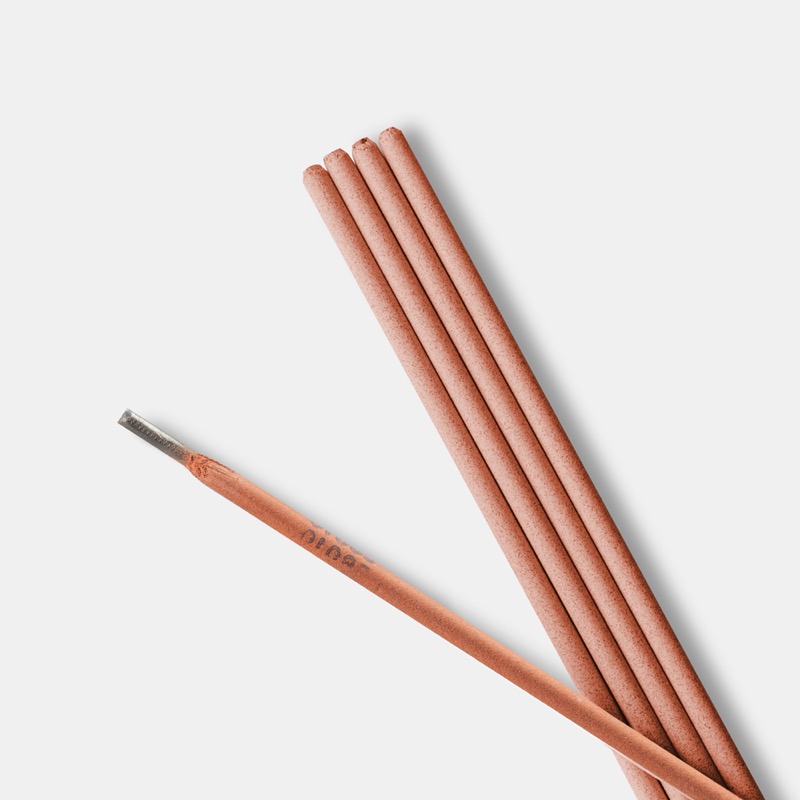
Pick E6010 if:
You have a DC welder and want the strongest, most focused arc for pipeline root passes or heavy field repairs. E6010 is the standard choice for pipeline welding per API 1104.
Runs on DCEP, 40-320A range. E6010 full amperage chart
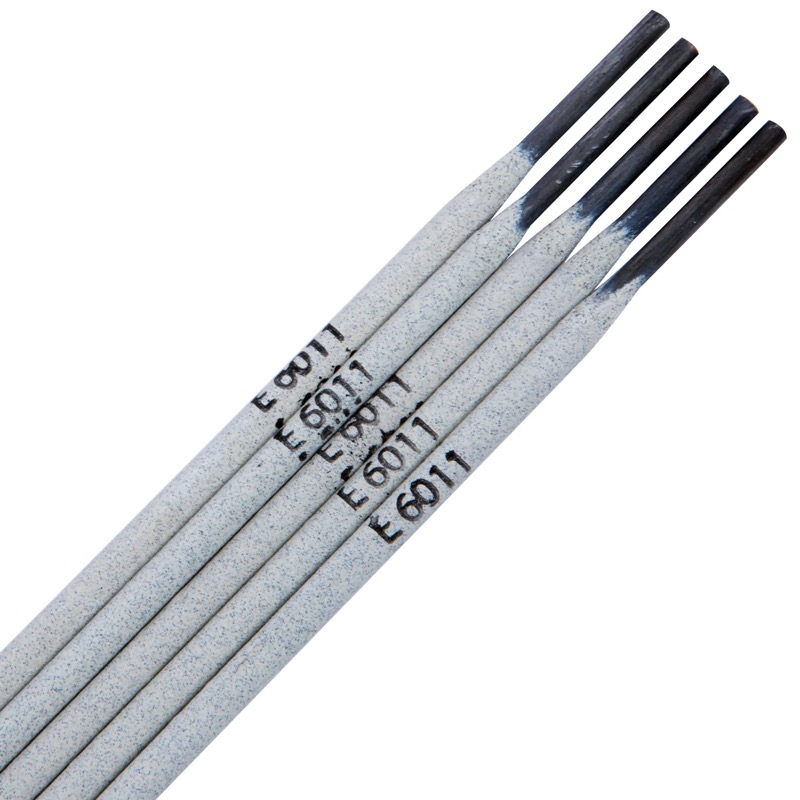
Pick E6011 if:
You have an AC-only welder (such as a buzz box or older transformer machine), or you need a versatile rod that works on any power source. E6011 is the practical choice for maintenance welding with mixed equipment.
Runs on AC, DCEP, 40-320A range. E6011 full amperage chart
How They Compare
| Attribute | E6010 | E6011 |
|---|---|---|
| Polarity | DCEP only | AC or DCEP |
| Arc characteristics | Slightly more aggressive dig, tighter spray arc | Slightly softer arc on DC, functional on AC |
| Coating chemistry | High cellulose sodium | High cellulose potassium (AC arc stabilizer) |
| Equipment required | DC welding machine only | Any AC or DC stick welder |
| Pipeline code acceptance | Standard choice for API 1104 root passes | Accepted but less common in pipeline work |
| Availability | Widely stocked in industrial supply | More common in hardware and farm supply stores |
Settings at a Glance
Machine settings and operating characteristics side by side. For full amperage charts, see the individual electrode pages.
| Setting | E6010 | E6011 |
|---|---|---|
| Polarity | DCEP | AC, DCEP |
| Positions | flat, horizontal, vertical-up, vertical-down, overhead | flat, horizontal, vertical-up, vertical-down, overhead |
| Penetration | deep | deep |
| Coating | high cellulose sodium | high cellulose potassium |
| Amps at 3/32" | 40-80A | 40-85A |
| Amps at 1/8" | 75-130A | 75-130A |
| Amps at 5/32" | 100-180A | 100-180A |
How E6010 and E6011 Work Together
In practice, most welders keep both in the truck. E6010 gives you a slightly tighter arc and better keyhole control on pipe roots, which is why pipeline specs almost always call for 6010 specifically. E6011 is the backup when the job site only has an AC machine, or when you are running a generator-powered buzz box in the field. The welds look the same to an inspector. The difference is in how the rod feels in your hand and what machine you need.
Common Mistake With E6010
The biggest mistake is assuming E6011 is just a worse E6010. It is not. E6011 was designed to run on cheaper machines, and it does that job well. The real risk is running E6010 on an AC machine that cannot support it. The arc will stutter, you will get poor fusion, and you will waste rods. Check your machine output before you open the box.
Picture This
You Are Here
You arrive at a farm to repair a broken implement frame. The farmer has an old Lincoln AC buzz box in the barn. You have both E6010 and E6011 in the truck.
What to Grab
Check the machine output. If it only puts out AC, E6010 will not strike an arc. Grab the E6011. If the machine has a DC output, E6010 gives you a slightly tighter, more controllable dig. On this repair, either rod will get the job done.
How It Fails
Running E6010 on an AC-only machine wastes your time and the rod. The arc stutters, dies, and restarts with poor fusion every half-cycle. You burn through rods getting nothing but cold laps.
How They Feel
E6010: E6010 on DC has a razor-sharp arc cone. The dig is aggressive and focused. The puddle snaps into place. You can hear each drop of metal transfer in the crackle.
E6011: E6011 on AC has a softer, wider spray. The arc flickers slightly at each zero-crossing but restarts clean. On DC it feels almost identical to E6010 with marginally less bite.
The Learning Path
If you only have an AC welder, E6011 is your rod. Once you get a DC machine, try E6010 side by side. The difference is subtle but real on pipe root passes.
Practical Differences
| Factor | E6010 | E6011 |
|---|---|---|
| Common Brands | Fleetweld 5P+, Hobart 610 | Fleetweld 35LS, Hobart 335A |
Where to Buy
As an Amazon Associate, GageRef earns from qualifying purchases. These are affiliate links.
E6010 vs E6011: Common Questions
Which is better, E6010 or E6011?
Wrong question. They solve different problems. Key differences: Polarity: E6010 has dcep only, while E6011 has ac or dcep. Arc characteristics: E6010 has slightly more aggressive dig, tighter spray arc, while E6011 has slightly softer arc on dc, functional on ac. Coating chemistry: E6010 has high cellulose sodium, while E6011 has high cellulose potassium (ac arc stabilizer). The comparison table on this page breaks down each trade-off.
Can I substitute E6010 for E6011?
Only if the specs allow it. E6010 runs on DCEP, E6011 on AC/DCEP. Your machine decides. Coating chemistry is different (high cellulose sodium vs high cellulose potassium), so the arc and slag behave differently.
Can I use both E6010 and E6011 on the same joint?
In practice, most welders keep both in the truck. E6010 gives you a slightly tighter arc and better keyhole control on pipe roots, which is why pipeline specs almost always call for 6010 specifically. E6011 is the backup when the job site only has an AC machine, or when you are running a generator-powered buzz box in the field. The welds look the same to an inspector. The difference is in how the rod feels in your hand and what machine you need.
Reference data only. Verify all settings against manufacturer documentation and the applicable welding code before use. Amperage ranges are starting points that vary by position, fit-up, and material. Welding involves serious injury risks including burns, electric shock, fume exposure, and fire. This site does not replace proper training, certification, or employer safety procedures. See full terms of use.
Data sourced from AWS A5.1/A5.1M.