E6011 vs E6013: Deep Dig vs Smooth Finish
Opposite rods for opposite jobs. E6011 digs deep into rusty, dirty steel on any welder. E6013 lays a pretty bead on clean, thin metal with zero drama. Pick based on the condition of your steel, not the position.
E6011: You are welding on dirty, rusty, or painted steel. E6013: You are welding clean, new sheet metal or thin-gauge material.
Which One Should You Use?
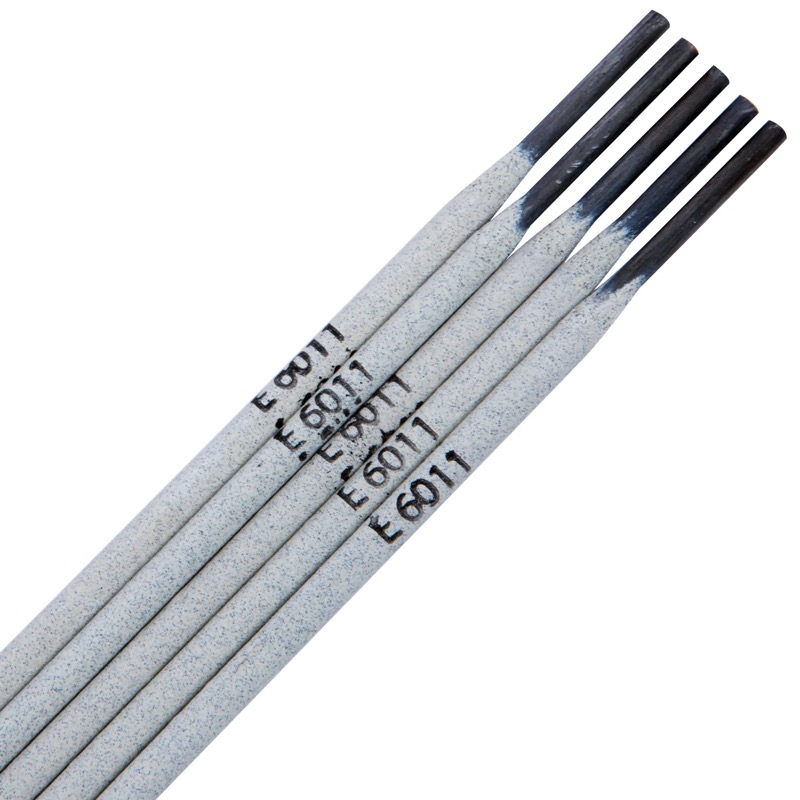
Pick E6011 if:
You are welding on dirty, rusty, or painted steel. You need deep penetration for reliable fusion on thicker material. You are doing maintenance and repair work where joint cleanliness cannot be guaranteed.
Runs on AC, DCEP, 40-320A range. E6011 full amperage chart
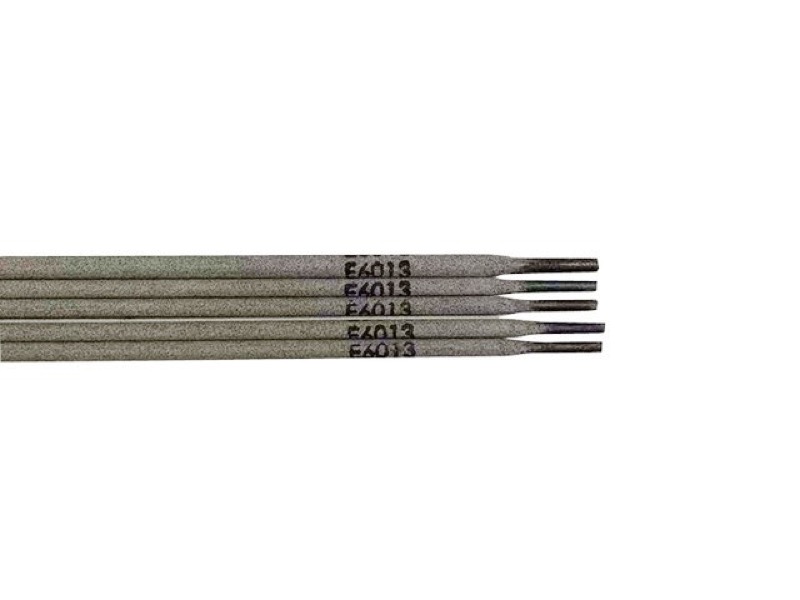
Pick E6013 if:
You are welding clean, new sheet metal or thin-gauge material. You want minimal spatter and a smooth bead appearance. You are a beginner learning arc welding technique.
Runs on AC, DCEP, DCEN, 40-300A range. E6013 full amperage chart
The Differences
| Attribute | E6011 | E6013 |
|---|---|---|
| Penetration | Deep, digging arc | Light, shallow arc |
| Arc force | Forceful spray arc | Soft, stable arc |
| Surface tolerance | Good on rusty, dirty, galvanized steel | Requires clean base metal |
| Spatter | Moderate to high | Minimal |
| Slag removal | Thin slag, easy removal | Moderate slag, easy removal |
| Beginner friendliness | Requires practice to control aggressive arc | Very easy to strike and maintain arc |
| Best thickness range | 3/16 inch and above | 20 gauge to 3/16 inch |
Settings at a Glance
Machine settings and operating characteristics side by side. For full amperage charts, see the individual electrode pages.
| Setting | E6011 | E6013 |
|---|---|---|
| Polarity | AC, DCEP | AC, DCEP, DCEN |
| Positions | flat, horizontal, vertical-up, vertical-down, overhead | flat, horizontal, vertical-up, overhead |
| Penetration | deep | light |
| Coating | high cellulose potassium | high titania potassium |
| Amps at 3/32" | 40-85A | 40-90A |
| Amps at 1/8" | 75-130A | 70-120A |
| Amps at 5/32" | 100-180A | 105-180A |
How E6011 and E6013 Work Together
Think of it this way: E6011 is the rod you grab when the steel is ugly and the joint needs to hold. E6013 is the rod you grab when the steel is clean and the weld needs to look good. In a school setting, instructors typically start students on E6013 because the forgiving arc builds confidence. Then they move to E6011 to teach arc control on aggressive rods. In a fab shop, E6013 handles sheet metal work while E6011 handles the structural tack-ups on existing steel. When welding galvanized steel, zinc fumes cause metal fume fever. Use forced ventilation or a supplied-air respirator. Grind the zinc coating from the weld area when possible.
Common Mistake With E6011
Running E6013 on rusty or painted steel is a common beginner error. The shallow penetration and rutile flux cannot deal with contaminants. You will get porosity and the weld will look fine on top but have no fusion underneath. If the steel is not clean, switch to E6011.
When It Matters
The Job
You need to weld a broken gate hinge back onto a rusty steel fence post. The metal has 20 years of rust and paint on it. You have an AC buzz box.
Which Rod Wins
E6011 burns through rust and paint. Its cellulose coating generates gas that displaces contamination. E6013 is designed for clean metal. On this rusty post, E6013 will pop and spatter as it hits the contamination layer, and the shallow penetration will not bite into solid metal under the rust.
Where It Breaks
E6013 on rusty metal gives you a bead that looks acceptable on top but has zero fusion underneath. The first hard slam of the gate tears the weld right off the post.
The Sensory Difference
E6011: E6011 attacks the metal. The arc digs through the rust layer and you can feel it grab solid steel underneath. It is loud and rough but the fusion is real.
E6013: E6013 glides across the surface. The arc is gentle, the bead is smooth. On clean metal this feels great. On rusty metal it feels like the rod is skating over the contamination instead of burning through it.
Where to Start
If all your metal is clean and you weld indoors, E6013 works fine for light work. Once you start doing repairs on dirty or rusty steel, E6011 becomes the rod you actually need.
Practical Differences
| Factor | E6011 | E6013 |
|---|---|---|
| Fume Level | High (0.8-1.5 g/min) | Medium (0.4-0.7 g/min) |
| Common Brands | Fleetweld 35LS, Hobart 335A | Fleetweld 37, Hobart 413 |
Where to Buy
As an Amazon Associate, GageRef earns from qualifying purchases. These are affiliate links.
E6011 vs E6013: Common Questions
Which is better, E6011 or E6013?
One is not a replacement for the other. Key differences: Penetration: E6011 has deep, digging arc, while E6013 has light, shallow arc. Arc force: E6011 has forceful spray arc, while E6013 has soft, stable arc. Surface tolerance: E6011 has good on rusty, dirty, galvanized steel, while E6013 has requires clean base metal. Start with what machine you have and what condition the steel is in.
Can I substitute E6011 for E6013?
Check the WPS or code first. E6011 runs on AC/DCEP, E6013 on AC/DCEP/DCEN. Your machine decides. Penetration differs: E6011 is deep, E6013 is light. Coating chemistry is different (high cellulose potassium vs high titania potassium), so the arc and slag behave differently.
Can I use both E6011 and E6013 on the same joint?
Think of it this way: E6011 is the rod you grab when the steel is ugly and the joint needs to hold. E6013 is the rod you grab when the steel is clean and the weld needs to look good. In a school setting, instructors typically start students on E6013 because the forgiving arc builds confidence. Then they move to E6011 to teach arc control on aggressive rods. In a fab shop, E6013 handles sheet metal work while E6011 handles the structural tack-ups on existing steel. When welding galvanized steel, zinc fumes cause metal fume fever. Use forced ventilation or a supplied-air respirator. Grind the zinc coating from the weld area when possible.
Reference data only. Verify all settings against manufacturer documentation and the applicable welding code before use. Amperage ranges are starting points that vary by position, fit-up, and material. Welding involves serious injury risks including burns, electric shock, fume exposure, and fire. This site does not replace proper training, certification, or employer safety procedures. See full terms of use.
Data sourced from AWS A5.1/A5.1M.