SAE ORB vs ORFS Hydraulic Fittings: Two O-Ring Seal Standards
The key difference: Seal Location: O-ring on male fitting seats against boss face vs O-ring on flat face compressed between mating faces. Full breakdown below.
Both ORB and ORFS use O-rings for leak-free sealing, making them superior to NPT for hydraulic applications. The difference is where the O-ring sits: ORB seats the O-ring against a machined boss (port) face, while ORFS seats it between the flat faces of the fitting and the port. Both provide excellent sealing but they are not interchangeable.
Key Differences
Seal Location: O-ring on male fitting seats against boss face vs O-ring on flat face compressed between mating faces.
Thread Type: Straight UN/UNF threads vs Straight UN/UNF threads.
Standard: SAE J1926, ISO 11926 vs SAE J1453, ISO 8434-3.
Port Requirement: Machined boss with counterbore and flat face vs Machined flat face port or tube fitting.
Vibration Resistance: Very good vs Excellent - best available.
Primary Use: Equipment ports, manifolds, pumps vs Tube-to-tube and tube-to-port connections.
When to Choose SAE ORB (O-Ring Boss)
ORB for equipment port connections: pumps, motors, valves, and manifold blocks
The machined boss design is standard on most North American hydraulic components.
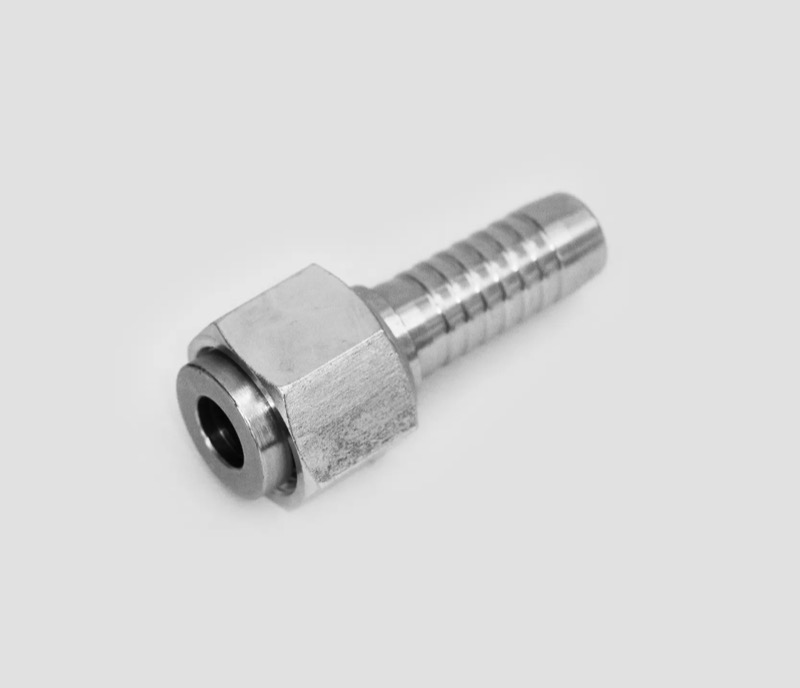
When to Choose ORFS (SAE J1453)
ORFS for tube-to-tube connections and any joint subject to high vibration
The flat face-seal design provides the most reliable seal under dynamic conditions.
Practical Notes
ORB is the most common port standard in North American hydraulic equipment. Pumps, motors, valves, and manifolds typically have ORB ports. ORFS is primarily used for tube-to-tube connections and where maximum vibration resistance is needed. In practice, a hydraulic system often uses ORB at the equipment ports and ORFS for the tube connections between components.
Common Mistake
Confusing ORB and ORFS because both use O-rings and straight threads. The O-ring configuration is different, and attempting to seat an ORFS fitting in an ORB port (or vice versa) will not seal properly even if the threads engage.
Reference data only. Verify thread dimensions with a thread identification gauge before making connections. Working with pressurized hydraulic systems involves serious injury risks including high-pressure injection, burns, and crushing hazards. This site does not replace manufacturer specifications, proper training, or employer safety procedures. See full terms of use.