JIC vs DIN Hydraulic Fittings: 37-Degree Flare vs Metric Compression
The key difference: Seal Angle: 37-degree flare on tube end vs 24-degree cone or flat washer. Full breakdown below.
JIC uses SAE 37-degree flare cone seal with UNF threads (North American standard). DIN uses metric threads with 24-degree cone or cutting ring compression seal (European standard). They represent the two dominant hydraulic fitting families divided primarily by geography.
Key Differences
Seal Angle: 37-degree flare on tube end vs 24-degree cone or flat washer.
Thread Form: UNF (imperial, 60-degree angle) vs Metric (M threads, 60-degree angle).
Tube Connection: Flared tube end mates with 37-degree cone vs Cutting ring (bite type) compression on tube.
Standard: SAE J514, ISO 8434-2 vs DIN 2353, ISO 8434-1.
Primary Region: North America, SAE equipment vs Europe, Asia, metric equipment.
Size Designation: Dash sizes by tube OD sixteenths (-4, -6, -8) vs Metric tube OD in millimeters (6L, 8L, 10L).
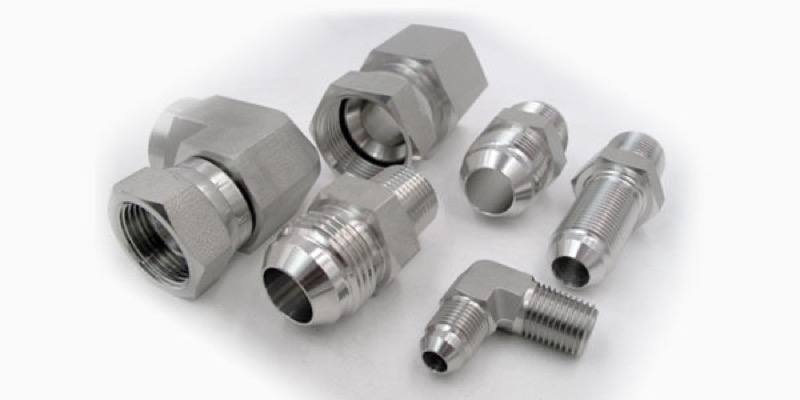
When to Choose JIC (SAE J514)
JIC for North American equipment, SAE-standard systems, and any application where the existing infrastructure is JIC
The 37-degree flare is the de facto North American hydraulic standard.
When to Choose DIN 2353 / ISO 8434-1
DIN for European or Asian equipment, metric-standard systems, and new designs targeting international markets
The metric sizing simplifies tube specification and procurement globally.
Practical Notes
A shop that works on both American and European equipment needs both JIC and DIN fittings in stock. Adapters are available but add cost and potential leak points. When designing new systems, choosing one standard consistently is preferable to mixing. Equipment from Caterpillar, John Deere, and most North American OEMs uses JIC. Equipment from Bosch Rexroth, Hawe, Parker (European lines), and most Asian manufacturers uses DIN.
Common Mistake
Trying to mate a JIC 37-degree flare with a DIN 24-degree cone seat. The angle mismatch creates a metal-to-metal seal that may hold initially but will leak under pressure cycling. The different angles also mean the tube end does not sit properly, concentrating stress and risking fatigue cracking.
Reference data only. Verify thread dimensions with a thread identification gauge before making connections. Working with pressurized hydraulic systems involves serious injury risks including high-pressure injection, burns, and crushing hazards. This site does not replace manufacturer specifications, proper training, or employer safety procedures. See full terms of use.