ORFS vs JIS Fittings: O-Ring Face Seal vs 30-Degree Flare Compared
The key difference: ORFS seals with an elastomeric O-ring between precision flat faces. Full breakdown below.
ORFS seals with an O-ring on a flat face for virtually zero-leak connections. JIS B 2351 uses a 30-degree flare with metric threads for a metal-to-metal seal. ORFS provides superior leak prevention; JIS is standard on Japanese-built hydraulic equipment.
Key Differences
ORFS seals with an elastomeric O-ring between precision flat faces.
JIS seals metal-to-metal at a 30-degree flare cone.
ORFS is more resistant to vibration-induced leaks because the O-ring maintains the seal even with minor movement.
JIS metal-to-metal seals can weep under sustained vibration.
ORFS uses SAE straight threads.
JIS uses metric threads.
ORFS fittings are more expensive but virtually eliminate leaks.
JIS is less expensive and widely available for Japanese equipment.
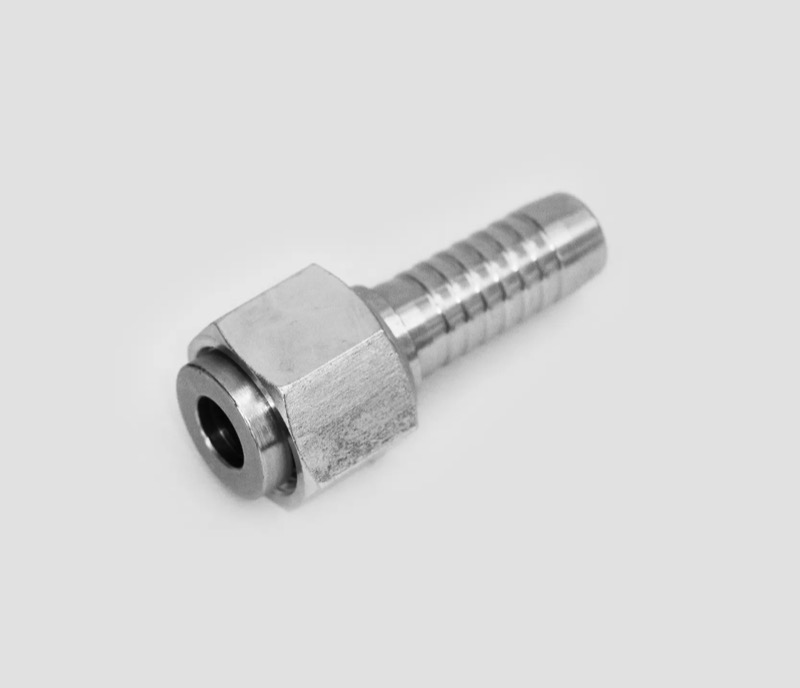
When to Choose ORFS (SAE J1453)
Critical hydraulic circuits where any leak is unacceptable
High-vibration mobile equipment applications
New system design where leak prevention is a priority.
When to Choose JIS B 2351
Japanese-manufactured equipment where JIS is the OEM standard
Replacement of existing JIS connections
Cost-sensitive applications where the 30-degree flare seal provides adequate performance.
Practical Notes
ORFS and JIS rarely appear in the same circuit unless someone is upgrading critical connections on Japanese equipment from JIS to ORFS for leak prevention. This is most common on excavators and cranes where vibration-induced leaks at JIS connections become a maintenance problem. ORFS-to-JIS adapters are available but less common than JIC or BSP adapters.
Common Mistake
Assuming all O-ring face seal fittings are ORFS. Some Japanese equipment uses proprietary face seal designs that look similar to ORFS but have different dimensions. Always verify with the equipment manual or a thread gauge.
Reference data only. Verify thread dimensions with a thread identification gauge before making connections. Working with pressurized hydraulic systems involves serious injury risks including high-pressure injection, burns, and crushing hazards. This site does not replace manufacturer specifications, proper training, or employer safety procedures. See full terms of use.