ORFS vs DIN Fittings: O-Ring Face Seal vs Cutting Ring Compared
The key difference: ORFS seals with an elastomeric O-ring compressed between two precision-machined flat faces. Full breakdown below.
ORFS (SAE J1453) seals with an O-ring on a flat face for virtually leak-free connections. DIN 2353 (ISO 8434-1) uses a 24-degree cone with a cutting ring that bites into the tube for a metal-to-metal seal. Both are high-performance standards used in demanding hydraulic systems.
Key Differences
ORFS seals with an elastomeric O-ring compressed between two precision-machined flat faces.
DIN seals metal-to-metal through a 24-degree cone and a cutting ring that grips the tube OD.
ORFS is more forgiving of minor surface imperfections because the O-ring conforms.
DIN requires precise tube preparation and correct cutting ring assembly.
ORFS provides superior vibration resistance.
DIN provides a wider range of metric tube sizes and is more common in European industrial hydraulics.
ORFS O-rings can degrade with certain fluids or temperatures; DIN metal-to-metal seal is fluid-independent.
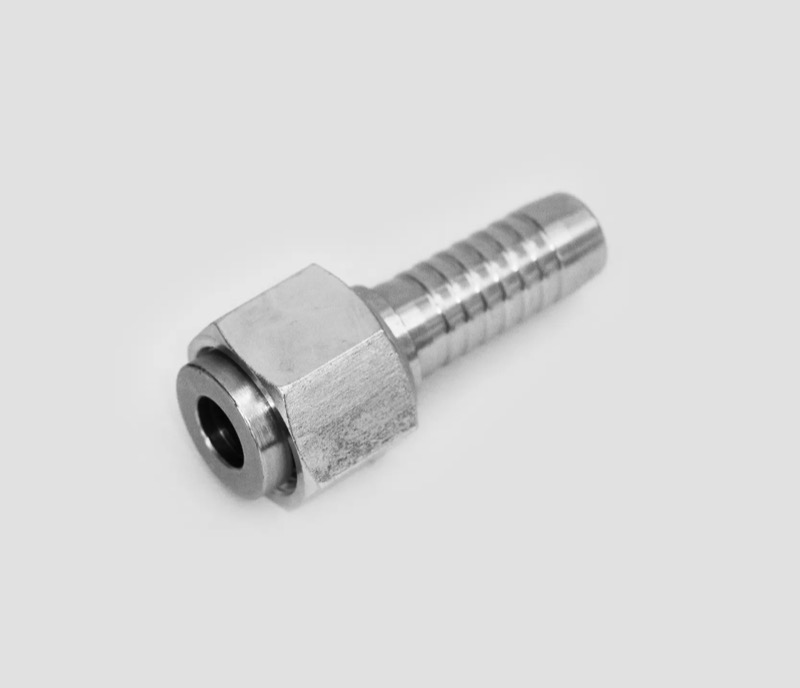
When to Choose ORFS (SAE J1453)
Applications demanding zero-leak performance
Vibration-prone systems (mobile equipment, marine)
Environmentally sensitive locations
When ease of assembly and reassembly matters.
When to Choose DIN 2353 / ISO 8434-1
European industrial hydraulic systems
Metric tube connections on machine tools and presses
Applications with extreme temperatures where O-ring material selection is a concern
Systems where DIN is the established standard and parts availability matters.
Practical Notes
ORFS and DIN represent two different approaches to high-performance hydraulic connections. In practice, many European machines use DIN for tube runs and ORFS at critical component ports. The two standards work well together with appropriate adapters. DIN requires more assembly skill (correct cutting ring pre-assembly) but has no consumable seal elements.
Common Mistake
Under-tightening DIN cutting ring assemblies. The cutting ring must fully bite into the tube to seal. A partially set ring will hold briefly but leak under pressure cycling. Always follow the manufacturer's pre-assembly and tightening specifications.
Reference data only. Verify thread dimensions with a thread identification gauge before making connections. Working with pressurized hydraulic systems involves serious injury risks including high-pressure injection, burns, and crushing hazards. This site does not replace manufacturer specifications, proper training, or employer safety procedures. See full terms of use.