NPT vs SAE ORB Fittings: Tapered Thread vs O-Ring Boss Compared
The key difference: NPT seals on the tapered threads themselves, requiring sealant and deforming with each assembly. Full breakdown below.
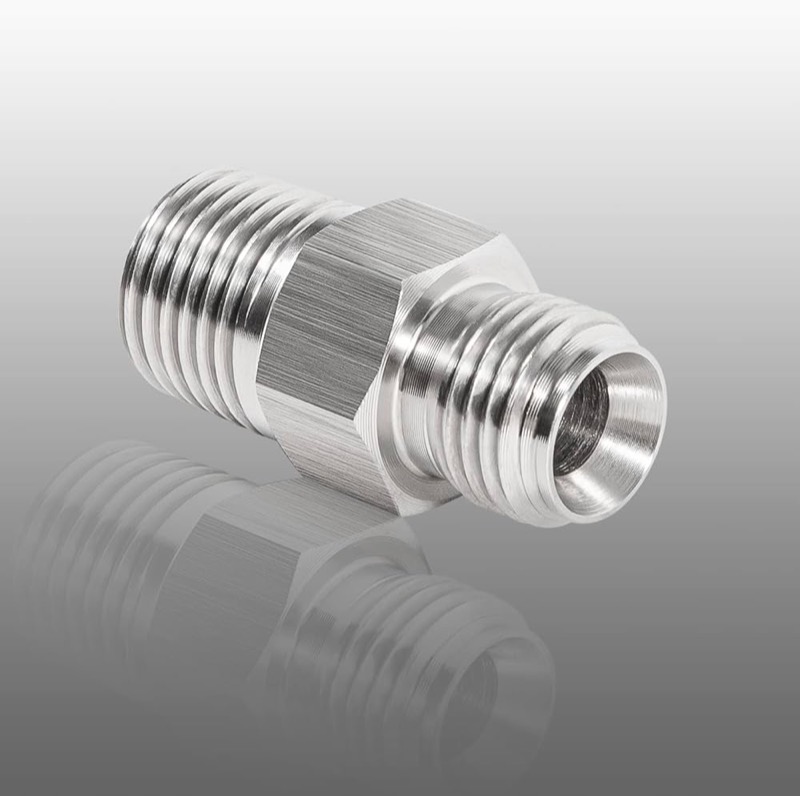
NPT uses tapered threads that seal by deforming against each other with sealant. SAE ORB uses straight threads with an O-ring that seals against a machined boss face. SAE ORB is increasingly replacing NPT in hydraulic applications because it provides a more reliable, reassemblable seal.
Key Differences
NPT seals on the tapered threads themselves, requiring sealant and deforming with each assembly.
SAE ORB seals with an O-ring against a precision-machined flat face, with the straight threads only providing clamping force.
SAE ORB can be reassembled many times with only an O-ring replacement.
NPT threads wear with each reassembly and eventually strip.
SAE ORB is less sensitive to torque: undertightened NPT leaks, overtightened NPT cracks castings.
SAE ORB is the modern standard for hydraulic component ports.
When to Choose NPT
Low-pressure pneumatic, water, and air systems
Legacy equipment with NPT ports that cannot be converted
When immediate parts availability at any hardware store is the priority.
When to Choose SAE ORB (O-Ring Boss)
Hydraulic component ports on pumps, valves, motors, and cylinders
Any application requiring zero-leak performance
Systems subject to vibration
Applications requiring repeated assembly and disassembly
New hydraulic system design.
Practical Notes
The hydraulic industry has been migrating from NPT to SAE ORB for decades. Most modern hydraulic components ship with SAE ORB ports. However, billions of NPT ports remain in service. NPT-to-SAE-ORB adapters are among the most commonly stocked hydraulic adapters. When converting, ensure the adapter O-ring material is compatible with your hydraulic fluid.
Common Mistake
Overtightening NPT fittings in cast iron or aluminum hydraulic housings, cracking the port boss. SAE ORB avoids this problem because the O-ring seals at lower torque than NPT requires.
Reference data only. Verify thread dimensions with a thread identification gauge before making connections. Working with pressurized hydraulic systems involves serious injury risks including high-pressure injection, burns, and crushing hazards. This site does not replace manufacturer specifications, proper training, or employer safety procedures. See full terms of use.