JIC vs BSP Fittings: Standards, Thread Differences & Regional Use
The key difference: JIC uses a 37-degree flare cone with straight UNF threads (SAE J514). Full breakdown below.
JIC (SAE J514) uses a 37-degree flare with UNF straight threads and dominates North American hydraulics. BSP comes in two variants: BSPP (parallel threads, seals with bonded washer or O-ring) and BSPT (tapered threads, seals on taper like NPT). They are not interchangeable despite similar appearance in some sizes.
Key Differences
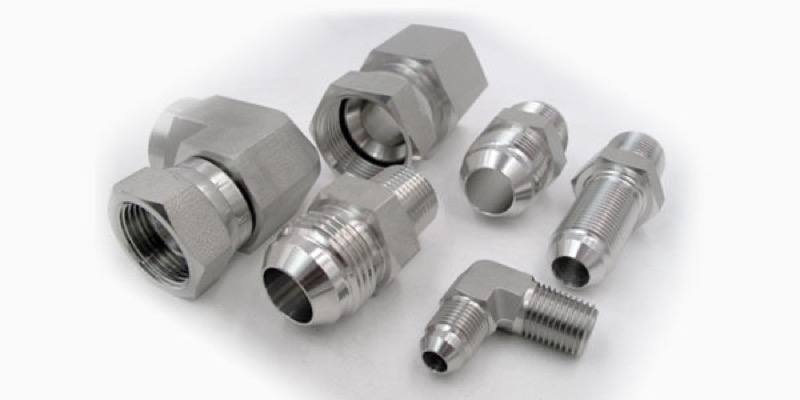
JIC uses a 37-degree flare cone with straight UNF threads (SAE J514).
BSP uses Whitworth thread form (55-degree thread angle) versus JIC's UN thread form (60-degree angle).
BSPP seals with a bonded washer or dowty seal against a flat face; BSPT seals on tapered thread interference.
JIC nominal sizes are in dash numbers based on tube OD in sixteenths of an inch.
BSP nominal sizes follow pipe bore convention and do not correspond to actual thread diameters.
A 1/2 inch JIC fitting and a 1/2 inch BSP fitting have completely different thread dimensions.
When to Choose JIC (SAE J514)
North American hydraulic systems
Mobile equipment built in the US
Systems requiring frequent reassembly
High-pressure applications where metal-to-metal flare sealing is preferred
Any project where JIC components are standard inventory.
When to Choose BSP (BSPP/BSPT)
Equipment built to European, Asian, or international standards
Systems where BSPP with bonded seal washers is the port standard
Replacement of existing BSP fittings
Machinery imported from the UK, Australia, or countries following ISO hydraulic standards.
Practical Notes
JIC and BSP threads look similar but the thread angle is different (60-degree UN vs 55-degree Whitworth). Attempting to cross-thread them will damage both fittings. When working on imported equipment, always verify with thread gauges before assuming either standard. Adapters between JIC and BSP are common and readily available.
Common Mistake
Assuming that JIC and BSP fittings in the same nominal size will thread together because they look similar. The thread angles are different, and forcing them together strips both threads.
JIC (SAE J514) vs BSP (BSPP/BSPT): Common Questions
How do I tell JIC from BSP fittings?
Measure the thread angle. JIC uses a 37-degree flare on the tube end with straight UNF threads at 60 degrees. BSP uses a 55-degree Whitworth thread angle with no flare. If you see a flared tube end, it is JIC (or AN). If the threads have a noticeably wider angle, it is BSP. A thread pitch gauge confirms: JIC uses UNF pitch, BSP uses Whitworth pitch. For the full measurement sequence, see the fitting identification guide. Learn how to use a thread gauge in the thread pitch gauge guide.
Reference data only. Verify thread dimensions with a thread identification gauge before making connections. Working with pressurized hydraulic systems involves serious injury risks including high-pressure injection, burns, and crushing hazards. This site does not replace manufacturer specifications, proper training, or employer safety procedures. See full terms of use.